Thursday, October 5, 2023
GASTON CHIASSAC STYLE PAINTINGS
Gaston Chiassac Style Paintings

Learning Targets
I can...
- Create an original Gaston Chiassac Style Painting using drawing techniques learned in class
- Use color combinations (analogous, complementary, secondary), shape variation (geometric, organic, free form), and line types (horizontal, vertical, diagonal) inspired by French Painter (1910-1964) Gaston Chiassac
- Use painting techniques (pigment, layering, blending, overlapping) and design principles (composition, proportion, variation) based on Art Brut
- Define Outsider Art (art made by self-taught artists with no contact with the art world)
Lesson One
Day One, Art Start
1. Two Figures In Abstract Space (1961) Gaston Chaissac

2. Read Chaissac by Sarah Clement

3. Discussion Questions "What is the difference between naive art and art brut? Can all people be artists? How does knowing the context of histories and traditions of art forms help us create works of art? Why do artists follow or break established traditions? How do artists appropriately use other's images and ideas? How do artists grow and become accomplished in art forms? How do artists take initiative to improve their work? How do images influence our views of the world? How do artworks convey meaning? How do visual arts experiences enhance the ability to understand art? How does art help us understand how people lived in different times, places, and cultures? How does one determine criteria to evaluate artwork?"
Lesson Activities
1. Use pencil to draw shape variation (geometric, organic, free form) of face parts (head, hair, shoulders ears) of abstract paintings
2. Use line types (straight, curved, narrow) to add facial features (eyes, eyelashes, hair, eye brows) to the abstract paintings
3. Use line types (horizontal, vertical, diagonal) to add details (buttons, ribbons, stripes, swirls) to the positive space (face) of the Gaston Chiassac Style Paintings
Day Two, Art Start
1. Retrieve Gaston Chiassac Style Paintings for Assigned Tables
2. Untitled (1963) Gaston Chiassac

3. Discussion Questions "How does knowing how people lived in different times and places influence our response to the artwork? What inspires people to make art? How do artists determine whether a particular direction in their work is effective? What responsibilities come with the freedom to create? What motivates and sustains artists in their practice? What factors prevent or encourage people to take creative risks? What role does persistence play in revising, refining, and developing work? How do people use creative and critical thinking skills their careers? How do people use creative and critical thinking skills their daily lives? How do people use art making knowledge and skills to enhance their homes, personal styles, and communities? How does creating enrich people's lives? Why do people learn about art in school and community settings?"
Lesson Activities
1. Use pencil to draw shape variation (geometric, organic, free form) of the face parts (head, shoulder, ears, hair) of the abstract paintings
2. Use line types (horizontal, vertical, diagonal) to add facial features (eyes, eyelashes, ears) to the positive space (face) of the abstract paintings
3. Use line types (horizontal, vertical, diagonal) to add details (buttons, fabric, floral) to the positive space (face) of the Gaston Chiassac Style Paintings
Day Three, Art Start
1. Retrieve Gaston Chiassac Style Paintings for Assigned Tables
2. Set Up Studio Area (tempera paint, paint brushes, water buckets)
Lesson Activities
1. Add highlights (reflective light, light source) to the positive space (face) of the abstract paintings
2. Add shadows (cast shadow, shadow) to the negative space (background) of the abstract paintings
3. Add value (lightness, darkness) to the positive space (face) and negative space (background) of the Gaston Chiassac Style Paintings
Artist Examples


 Student Examples


Tuesday, November 15, 2022
GILL EGGLESTON FLOWERS
Gill Eggleston Flowers

Learning Targets
I can...
- Create an original Gill Eggleston Flowers using drawing techniques learned in class
- Use line types (horizontal, vertical, diagonal), shape variation (geometric, organic, free form), and color combinations (analogous, complementary, primary) inspired by British Artist (1997-Present) Gill Eggleston
- Use form (two-dimensional, three-dimensional) and design principles (proportion, gradation, composition) based on Contemporary Art
- Define Perspective (illusion of space and depth on a flat surface)
Lesson One
Day One, Art Start
1. Back To Floral (2019) Gill Eggleston

2. Read Bloom Boom by April Pulley Sayre

3. Discussion Questions "What colors do you see? Where are the petals on this plant? Can you find the leaves? What part of these plants is the stem? How many petals are on this flower? Can you count how many flowers are on this page? Are the leaves on this painting big or small? What colors are the flowers? What color is the stem? What do you know about what plants need to live? Do you think the flowers you picked had these things? What can you see on the plant that would help it get these things? Did you see any bugs or other creatures while you were picking flowers? What parts of the flowers do you see?"
Lesson Activities
1. Choose 12" X 15" Drawing Paper
2. Use line types (horizontal, vertical, diagonal) to draw the positive space (flower) of the flower compositions
3. Use analogous colors (red, blue, purple) to fill in the positive space (flower) of the Gill Eggleston Flowers
Day Two, Art Start
1. Retrieve Gill Eggleston Flowers for Assigned Tables
2. Esme Floral (2018) Gill Eggleston

3. Discussion Questions "What do you know about what plants need to live? Do you think the flowers you picked had these things? What can you see on the plant that would help it get these things? What differences can you see in the plants you investigated? Did you see any bugs or other creatures while you were picking flowers? What things were the same about the creatures you noticed? What things were different? How can we ensure that our exploration doesn't harm the plants? What should we do to cause as little harm as possible? Can you make a picture of one of the plants you found? What are some of the parts of the flower?"
Lesson Activities
1. Add shape variation (geometric, organic, free form) to the negative space (background) of the flower compositions
2. Use patterns (swirls, zig zags, stripes) to add designs to the negative space (background) of the flower compositions
3. Use chalk to blend patterns (swirls, zig zags, stripes) for the negative space (background) of the Gill Eggleston Flowers
Day Three, Art Start
1. Retrieve Gill Eggleston Flowers for Assigned Tables
2. Set Up Studio Area (construction paper, glue sticks, scissors)
Lesson Activities
1. Blend analogous colors (red, blue, purple) for the positive space (flowers) of the flower compositions
2. Add highlights (light source, reflective light) to the positive space (flower) of the flower compositions
3. Add illusion of depth by adding details (petals, glitter, sprinkles) to the positive space (foreground) of the Gill Eggleston Flowers
Artist Examples
 Student Examples


Wednesday, October 5, 2022
BISA BUTLER SELF PORTRAITS
Bisa Butler Self Portraits

Learning Targets
I can...
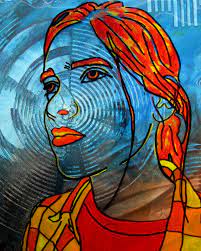
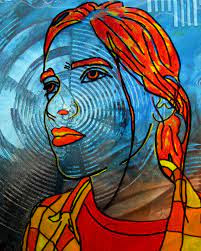
- Create an original Bisa Butler Self Portraits using printmaking techniques learned in class
- Use line variation (continuous, contour, outline), shape types (geometric, organic, free form), and texture (actual, implied, visual) inspired by American Fiber Artist (1973-Present) Bisa Butler
- Use drawing techniques (cross hatching, stippling, scribbling) and design principles (balance, portion, harmony) based on Fiber Art
- Define Portrait (a painting or drawing of the face, head, and shoulders)
Lesson One
Day One, Art Start
1. The Tea (2017) Bisa Butler

2. Read "Bisa Butler: Portraits" by Erica Warren

3. Discussion Questions "Do you think this is a self-portrait? How does this portrait make you feel? Are you interested in the portrait? Do you like the way the artist has arranged the picture? Do you like the way the artist has shown details? Can you predict if a male or female artist created this portrait? What is a portrait? Why do artist paint portraits? Who is the person in the portrait? How old is the person? What does the picture tell you about the time that the subject was made? How do you think the artist felt about the person he or she painted? How do you think the person in the picture is feeling? What is the mood of the person in the picture? How can you tell?"
Lesson Activities
1. Choose 12" X 15" Drawing Paper
2. Use graphite pencil to draw line types (contour, outline, continuous) of facial proportions (head, face shoulder) of self portrait
3. Use graphite pencil to add facial features (eyes, nose, mouth, eyebrows) to the positive space (portrait) of the Bisa Butler Self Portraits
Day Two, Art Start
1. Retrieve Bisa Butler Self Portraits for Assigned Tables
2. The Princess (2017) Bisa Butler

3. Discussion Questions "How has the artist arranged the portrait? Do you think the person posted for this portrait? Where is the person looking (at the viewing, away, at something else)? If there is more than one person in the picture, are they touching? What could this mean? What does the background and the objects in the background of the picture tell us? How much space has the artist left around the person? How is the space being used? What view of the person is pictured? Is the portrait realistic or is the portrait abstract? What shapes can you see in this portrait? Are the lines in the portrait straight or curved? How often does the artist repeat certain colors or shapes within the portrait?"
Lesson Activities
1. Add adornments (piercings, tattoos, hairstyles) to the positive space (portrait) of the self portrait
2. Add costumes (jewelry, clothing, make up) to the positive space (portrait) of the self portraits
3. Use black sharpie marker to outline the face features (eyes, nose, mouth) and facial proportions (head, face, shoulder) of the Bisa Butler Self Portraits
Day Three, Art Start
1. Retrieve Bisa Butler Self Portrait for Assigned Table
2. Set Up Studio Area (acetate, sharpie markers, pens)
Lesson Activities
1. Use primary colors (red yellow blue) to fill in the positive space (clothing, jewelry, facial features) of the self portrait
2. Use primary colors (red blue yellow) to fill in the negative space (background) of the self portrait
3. Use value (lightness, darkness) to add shadows (reflective shadow, cast shadow) and highlights (reflective light, light source) to the Bisa Butler Self Portraits
Artist Examples


 Student Examples


Thursday, September 22, 2022
GRUMPY MONKEY COLLAGES
Grumpy Monkey Collages

Learning Targets
I can...
- Create an original Grumpy Monkey Collage using drawing techniques learned in class
- Use line types (contour, outline, continuous), shape variation (geometric, organic, free form), and texture (implied, actual, visual) inspired by American Author (2018-Present) Suzanne Lang
- Use collage techniques (layering, cropping, overlapping) and design principles (composition, variation, emphasis) based on American Art
- Define Expression (describe ideas, facts, or feelings through an arrangement of forms, sounds, or words)
Lesson One
Day One, Art Start
1. America Goth Monkey (2018) Susan Clyne

2. Read Grumpy Monkey by Suzanne Lang

3. Discussion Questions "What can we do to help manage our anger? What does anger or irritability look like? When you are angry can you understand another person? Are we reasonable or realistic when we are angry? How can we change those situations? If anger was a color, what color would it be? If anger was a sound, what sound would it be? How have you calmed yourself down when you were feeling angry? How can you express concerns without getting angry? What are some solutions you have when you feel angry?"
Lesson Activities
1. Choose 12" X 15" Drawing Paper
2. Add line types (contour, outline, perspective) to the positive space (animal) of the monkey collages
3. Outline line types (contour, outline, perspective) with the neutral colors (black, brown, grey) for the Grumpy Monkey Collages
Day Two, Art Start
1. Retrieve Grumpy Monkey Collages for Assigned Tables
2. The Monkey With The Pearl Earring (2017) Susan Clyne

3. Discussion Questions "How many species of monkeys are there? Did the artist paint in long brush strokes? Are the lines curved, straight, or thin? Does the artist use a variety of shapes? What types of shapes do you see? What are the colors that the artist uses? What do you think the artwork is about? What are the similarities in the story behind this artwork? Have you heard these stories before? Why are monkeys angry? Why are monkeys considered angry creatures?"
Lesson Activities
1. Use analogous colors (blue purple red) to fill in the positive space (monkey) of the monkey collages
2. Use analogous colors (blue purple red) to fill in the negative space (background) of the monkey collages
3. Use embellishments (plastic eyes, bubble wrap, brown paper) to fill in the positive space (monkey) of the Grumpy Monkey Collages
Day Three, Art Start
1. Retrieve Grumpy Monkey Collages for Assigned Tables
2. Set Up Studio Area (scissors, glue sticks, oil pastels)
Lesson Activities
1. Add highlights (reflective light, light source) to fill in the positive space (monkey) of the monkey collages
2. Add shadows (cast shadow, reflective shadow) to fill in the negative space (background) of the monkey collages
3. Add details (eyelashes, fur, claws) to the positive space (monkey) of the Grumpy Monkey Collages
Artist Examples

Student Examples


Wednesday, December 1, 2021
MIXED MEDIA SLOTHS
Mixed Media Sloths Learning Targets

I can...
- Create an original Mixed Media Sloth using drawing techniques learned in class
- Use shape variation (geometric, organic), analogous colors (blue purple red) and line types (horizontal vertical diagonal) inspired by American Illustrator (2013-Present) Victoria Borges
- Use collage techniques (readymade, clippings, composing) and design principles (composition, balance, variation) based on American Art
- Define Balance (the distribution of the visual weight of objects, colors, texture, and space)
Lesson One
Day One, Art Start
1. Sloth Sayings III (2020) Victoria Borges

2. Read Slowly, Slowly, Slowly, Said the Sloth by Eric Carle

3. Discussion Questions "How many species of sloths are there? Why are sloths so slow? How far can a sloth travel in a day? Why do sloths leave the sheltered canopy and go to the ground? What do sloths eat? How much food do sloths consume? How long do sloths sleep? What is the biggest threat to a sloth? What are sloths considered lazy creatures? What does a sloth's scientific name mean in Greek? How much faster are sloths swimming than walking? What is an arboreal habitat made up of? How long can it take for a sloth to digest a single meal? Are sloths the world's slowest mammals?"
Lesson Activities
1. Choose 8" X 12" Drawing Paper
2. Add line types (contour, outline, perspective) to the positive space (animal) of the sloth drawings
3. Outline line types (contour, outline, perspective) with the neutral colors (black, brown, grey) for the Mixed Media Sloths
Day Two, Art Start
1. Retrieve Mixed Media Sloths for Assigned Table
2. Sloth Sayings IV (2020)Victoria Borges

3. Discussion Questions "How many species of sloths are there? Did the artist paint in long brush strokes? Are the lines curved, straight, or thin? Does the artist use a variety of shapes? What types of shapes do you see? What are the colors that the artist uses? What do you think the artwork is about? What are the similarities in the story behind this artwork? Have you heard these stories before?"
Lesson Activities
1. Use analogous colors (blue purple red) to fill in the positive space (animal) of the sloth drawings
2. Use analogous colors (blue purple red) to fill in the negative space (background) of the sloth drawings
3. Use embellishments (plastic eyes, bubble wrap, brown paper) to fill in the positive space (animal) of the Mixed Media Sloths
Day Three, Art Start
1. Retrieve Mixed Media Sloths for Assigned Table
2. Set Up Studio Area (scissors, glue sticks, construction paper)
Lesson Activities
1. Add highlights (reflective light, light source) to fill in the positive space (animal) of the sloth drawings
2. Add shadow (cast shadow, reflective shadow) to fill in the negative space (background) of the sloth drawings
3. Add details (eyelashes, fur, claws) to the positive space (animal) of the Mixed Media Sloths
Artist Examples


 Student Examples


 Posts
Posts

