Tuesday, February 3, 2026
CHARCOAL FLOWER STUDIES
Charcoal Flower Studies

Learning Targets
I can...
- Create an original Charcoal Flower Studies using drawing techniques learned in class
- Use neutral colors (black, grey, brown, white), value (highlights, shadows, tints, tones), and texture (actual, visual, implied) inspired by German Photographer (1865-1932) Karl Blossfeldt
- Use drawing techniques (shading, hatching, contouring, cross hatching) and design principles (contrast, proportion, variation) based on New Objectivity
- Define Chiaroscuro (the treatment of light and shade in a drawing or painting)
Lesson One
Day One, Art Start
1. Astrantia Major, Large Hollyhock (1915-1925) Karl Blossfeldt

2. Read The Burgess Flower Book For Children by Thornton W. Burgess

3. Discussion Questions "How can we create a bright, white flower on this pitch-black paper without using white paint or crayons? If you had to draw the texture of these petals using only your fingertips and black dust, how would you start? Are the petals in this photograph triangular or almond shaped? If you touch the petals, are the petals feathery, glossy, or velvety? How can we make the paper look like texture we are describing? Which part of the flower the bright white and where are the darkest shadows hiding? How can you make a ghost line? What will happen if you draw a line and then smudge the line with a tissue? Can. you draw with your eraser? Can you make five different shades of grey between the blackest black and the white of the paper? What story does the flower tell? If this flower could talk, what kind of personality would it have? Why might an artist choose a black-and-white (monochromatic) medium to reprint a brightly colored object like a flower?"
Lesson Activities
1. Choose 12" X 15" Drawing Paper
2. Use line types (horizontal, vertical, diagonal) to draw positive space (foreground, flower) of the Charcoal Flower Studies
3. Use color combinations (monochromatic, neutral) to fill in the positive space (flower, foreground) of the Charcoal Flower Studies
Day Two, Art Start
1. Retrieve Charcoal Flower Studies for Assigned Tables
2. Campanula, Canterbury Bell (1942) Karl Blossfeldt

3. Discussion Questions "How did you use large shapes and small shapes to make your artwork interesting? What happens when you put a large flower next to small details? Can you find straight and curved lines in your work? How do these straight lines and curved lines differ from other artwork? How did you use think and thin lines to make parts of your flower stand out? If you could change one thing to make the contrast stronger, what would it be? What was the hardest part about creating contrast in this artwork? What is the first thing your eye is drawn to in this picture? How would you describe the difference between your flower and your background? What title would you give your artwork? How does the smooth peels feel different from the rough stem or soft center? Where is the light coming from in this artwork? Do you see any dark shadows that make the bright parts look even brighter?"
Lesson Activities
1. Add shape variation (geometric, organic, free form) to the negative space (background) of the Charcoal Flower Studies
2. Use pattern (stripes, swirls, curls) to add a design to the negative space (background) of the Charcoal Flower Studies
3. Use chalk to blend patterns (swirls, stripes, curls) for the negative space (background) of the Charcoal Flower Studies
Day Three, Art Start
1. Retrieve Charcoal Flower Studies for Assigned Tables
2. Set Up Studio Area (charcoal sticks, white charcoal, erasers, charcoal pencils)
Lesson Activities
1. Blend color combinations (monochromatic, neutral) for the positive space (flower, foreground) of the Charcoal Flower Studies
2. Add highlights (light source, reflective light) to the positive space (foreground, flower) of the Charcoal Flower Studies
3. Add illusion of depth by add details (glitter, details, petals) to the positive space (foreground, flower) of the Charcoal Flower Studies
Artist Examples


 Student Examples


Thursday, August 31, 2023
CHARCOAL HOGWARTS CASTLES
Charcoal Hogwarts Castles Learning Targets

I can...
- Create an original Charcoal Hogwarts Castle using drawing techniques learned in class
- Use neutral colors (black, grey, white), form (two dimensional, three dimensional), and value (lightness, darkness, tints, shades) inspired by wizard architects (993) Gordic Gryffindor, Helga Hufflepuff, Rowena Ravenclaw, and Salazar Sytherin
- Use architectural elements (scale, proportion, ornament) and design principles (balance, rhythm, movement) based on the Harry Potter Novel Series by J.K. Rowling
- Define Architecture (the art or practice of designing and constructing buildings)
Lesson One
Day One, Art Start
1. Hogwarts Castle (1993) J.K Rowling

2. Read Harry Potter Novel Series by J.K. Rowling

3. Discussion Questions "What is the architectural style of the Hogwarts Castles? How long did it take to build the Hogwarts Castle model? Where would you believe the Hogwarts Castle is located? Would you enroll at the Hogwarts Castle? Would you want the Hogwarts Castle to be real? Would you visit Alnwick Castle, one of the filming spots used in Harry Potter and the Philosopher's Stone? How do first years get from the Hogsmeade train station to the castle? How many floors are in the Hogwarts castle? How many staircases does Hogwarts Castles have? Who was the wizard architect behind the Hogwarts Castle? What are the functions and architectural elements of these castles?"
Lesson Activities
1. Retrieve 12" X 15" Drawing Paper
2. Draw a horizon line in the negative space (background) of the drawing paper for the castle drawings
3. Use shape variation (geometric, organic, free form) to add building elements (towers, walls, ladders, doors) to the positive space (building) of the Charcoal Hogwarts Castles
Day Two, Art Start
1. Retrieve Charcoal Hogwarts Castles for Assigned Tables
2. Hogwarts Castle Model (2012) J.K. Rowling

3. Discussion Questions "How do artists use geometric shapes to draw their castles? Do artists create patterns on their castles? Doo artists draw castles that take up most of the space on the paper? How do artists use horizon lines to create depth within a drawing? How do these castles connect to fairytale stories or architecture? What were groups of knights that protected the castle called? What are main features of a castle? How were castles built? Have you ever made a castle? What would make the best castle- height, sturdiness, or level of detail? Why were medieval castles built in medieval times? What were the first castles made out of? What was the castles purpose? What is the title of the person in charge of the affair within the castle?"
Lesson Activities
1. Use line variation (vertical, horizontal, diagonal) to add texture (bricks, stones, metal) to the positive space (castle) of the Charcoal Hogwarts Castles
2. Add architectural features (flag, moat, draw bridge, windows) to the positive space (castle) of the castle drawings
3. Use eraser to remove any guidelines from the positive space (building) of the Charcoal Hogwarts Castles
Day Three, Art Start
1. Retrieve Charcoal Hogwarts Castles for Assigned Tables
2. Set Up Studio Area (charcoal, erasers, pencils, white charcoal)
Lesson Activities
1. Use neutral colors (black, grey, white) to fill in the positive space (building) of the castle drawings
2. Use neutral colors (black, grey, white) to fill in the negative space (background) of the castle drawings
3. Add highlights (reflective light, light source) and shadows (cast shadow, shadow) to the positive space (building) of the Charcoal Hogwarts Castles
Artist Examples
 Student Examples


Thursday, September 15, 2022
MAYA GLYPHS IN CHARCOAL
Maya Glyphs In Charcoal

Learning Targets
I can...
- Create an original Maya Glyph In Charcoal using drawing techniques learned in class
- Use line types (continuous, contour, outline), shape variation (geometric, organic, free form), and space (positive, negative) inspired by Mayan Hieroglyphs
- Use drawing methods (charcoal, powder, pigment) and design principles (gradation, proportion, balance) based on the Classic Period
- Define Glyph (symbolic figure or character (system of writing) incised or carved in relief
Lesson One
Day One, Art Start
1. Structure 23, Lintel 25, Yaxchilan (Maya)

2. Read Breaking The Maya Code by Michael D. Coe

3. Discussion Questions "What did Mayans use glyphs for? How old are Mayan glyphs? What were mayan writing symbols called? How was Mayan art heavily influenced by other religions and cultures? Where the Mayan kings successful in wanting their artwork to be remembered throughout history? Why were wood carvings very popular pieces of art for the Mayans? What sense from daily life, mythology, battles, and religious ceremonies are being included here? How do these glyphs provide an important source of information about Maya society?"
Lesson Activities
1. Choose 12" X 12" Drawing Paper
2. Use shape variation (geometric, organic, free form) to draw the positive space (symbols) for the charcoal glyphs
3. Use line types (horizontal, vertical, diagonal) to add details (shadows, highlights) to the positive space (glyphs) of the Maya Glyphs In Charcoal
Day Two, Art Start
1. Retrieve Maya Glyphs In Charcoal for Assigned Tables
2. Mayan Glyphs, Kwamikagmi

3. Discussion Questions "When was the ancient Mayan Period? What would you find inside these structures? What are the names of these hieroglyphics? Who was the last ruler of Maya? What does the word hieroglyphs mean? What is the importance behind these hieroglyphs? What is the oldest known monumental sculpture in Maya? What was the purpose of Maya art? Who built the Maya templates?"
Lesson Activities
1. Use neutral colors (black, grey, white) to fill in the positive space (glyphs) of the charcoal glyphs
2. Use neutral colors (black, grey, white) to fill in the negative space (background) of the charcoal glyphs
3. Use line types (horizontal, vertical, diagonal) to fill in the positive space (glyphs) with designs for the Maya Glyphs In Charcoal
Day Three, Art Start
1. Retrieve Maya Glyphs In Charcoal for Assigned Tables
2. Set Up Studio Area (charcoal, colors pencils, erasers)
Lesson Activities
1. Add highlights (light source, reflective light) to positive space (foreground) of the charcoal glyphs
2. Add shadows (cast shadow, shadows) to negative space (background) of the charcoal glyphs
3. Use neutral colors (black, grey, white) to outline the line types (horizontal, vertical, diagonal) of the positive space (foreground) of the Maya Glyphs In Charcoal
Artist Examples


 Student Examples


Saturday, August 22, 2020
CHARCOAL TREES
Charcoal Trees

Learning Targets
I can...
- Create an original Charcoal Tree using drawing techniques learned in class
- Use neutral colors (grey, black, white), shapes (geometric, organic), and value (lightness, darkness) inspired by Dutch Artist (1872-1944) Piet Mondrian
- Use drawing techniques (smudging, blending, and smoothing) and design principles (placement, proportion, composition) based on Expressionism
- Define Expressive (conveying a thought or feeling in an image)
Day Two, Art Start
1. Grey Tree (1911) Piet Mondrian

2. Read Tree Lady: The True Story of How One Tree-Loving Woman Changed a City Forever by Joseph Hopkins

3. Discussion Questions "What kind of tree is this? How old is the tree? What season is it? Has anyone tried to cut it down? What else grows nearby? Who waters the tree? Does the tree get enough sunlight? Is the tree healthy? What is a tree a symbol of? Where is the tree located? If you were in the picture, where would you be? Did you enjoy creating a tree that represented you? What makes a good scientific sketch? What details were important to include in each tree? How tall do you think the tree is? Have you noticed how different the forest looks through the different seasons? If you climbed the top of that tree and looked around, what do you think you would be able to see from there?"
Lesson Activities
- Choose 12" by 15" Drawing Paper
- Draw three thumbnail sketches of tree compositions using drawing techniques (blending, smudging, smooth) for tree drawings
- 3. Add details (leaves, acorn, hole) for positive space (tree) of the tree drawings
Day Two, Art Start
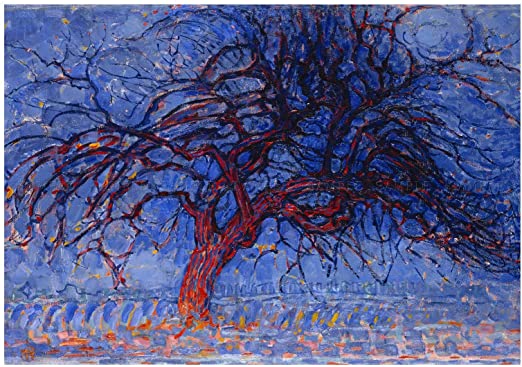
Lesson Activities
- Use drawing techniques (blending, smudging, smoothing) to add basic shapes (geometric, organic) of tree for tree drawings
- Use design principles (composition, repetition, gradation) to fill in the positive space (trunk, branches, twigs) of tree drawings
- Use drawing techniques (blending, smudging, smoothing) to add details (bark, leaves, hole) of tree drawings
Day Three, Art Start
- Retrieve Charcoal Trees for Assigned Table
- Set Up Studio Area (charcoal sticks, erasers, pencils)
Lesson Activities
- Use neutral colors (black, grey, white) to fill in the positive space (foreground) of the tree drawings
- Use neutral colors (black, grey, white) to fill in the negative space (background) of the tree drawings
- Add design details (birds, owl, bat) to positive space (foreground) of Charcoal Trees
Artist Examples


Student Examples


 Posts
Posts

