Monday, September 25, 2023
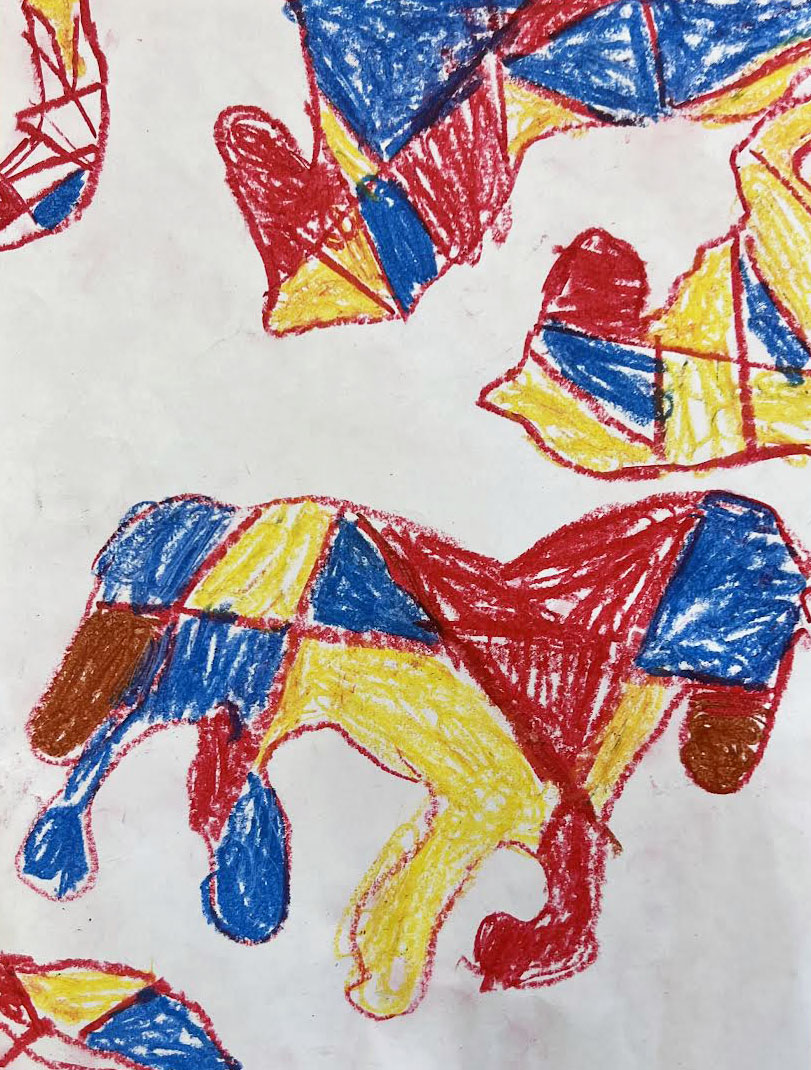
PIET MONDRIAN ANIMALS
Piet Mondrian Animals

Learning Targets
I can...
- Create an original Piet Mondrian Animals using paintings techniques learned in class
- Use line types (horizontal, vertical, diagonal), primary colors (red yellow blue), and shape variation (geometric, organic, free form) inspired by Dutch Artist (1872-Present) Piet Mondrian
- Use art element color (primary colors, red, yellow, blue) and design principles (repetition, composition, contrast) based on Modern Art
- Define Neoplasticism (a style of painting using only vertical lines, horizontal lines, and rectangular shapes in primary colors)
Lesson One
Day One, Art Start
1. Composition No. II (1920) Piet Mondrian

2. Read Piet Mondrian: The Man Who Changed Everything by Waanders Uitgevers Zwolle

3. Discussion Questions "How did Piet Mondrian come to paint this way? How did you choose the placement of colors? What colors do you notice first in the artist's paintings? What she is the largest colored shape? What size is the smallest? What is the most space you have between colored shapes? What is the least? Can you see the shape of a tree in this painting? What makes Piet Mondrian artwork abstract? Is Mondrian thinking about similar things in his artwork? What do you think Piet Modniran is trying to express? How is Piet Mondrian's artwork different from other artists?"
Lesson Activities
1. Choose 12" X 15" Painting Paper
2. Add line types (horizontal vertical diagonal) to the positive space (animal) of the Piet Mondrian Animals
3. Outline line types (horizontal, vertical, diagonal) with neutral colors (black, grey, white) for the positive space (animal) of the Piet Mondrian Animals
Day Two, Art Start
1. Retrieve Piet Mondrian Animals for Assigned Tables
2. Composition A (1923) Piet Mondrian

3. Discussion Questions "Who was Piet Mondrian? What do you notice in this painting Piet Mondrian created? What is Piet Mondrian the founder of? Where was Piet Mondrian born? What shapes did Mondrian mainly use in his paintings? How did Piet Mondrian create straight lines? Who introduced Mondrian to art? How did Piet Mondrian's artwork evolve from 1908 to 1912? What school did Piet Mondrian attend? How did Mondrian's artwork change overtime? What style did Mondrian paint his artwork in? What are movement is Modern Art characterized by? What is the title of this painting?"
Lesson Activities
1. Use primary colors (red yellow blue) to fill in the positive space (animal) of the Piet Mondrian Animals
2. Use primary colors (red yellow blue) to fill in the negative space (background) of the Piet Mondrian Animals
3. Use colored construction paper (blue, red, yellow) to fill in the negative space (background) of the Piet Mondrian Animals
Day Three, Art Start
1. Retrieve Piet Mondrian Animals for Assigned Tables
2. Set Up Studio Area (water bucket, paint brushes, tempera paint)
Lesson Activities
1. Add highlights (reflective light, light source) to fill in the positive space (animal) of the Piet Mondrian Animals
2. Add shadows (reflective shadow, cast shadow) to fill in the negative space (background) of the Piet Mondrian Animals
3. Add details (whiskers, claws, spots, eyelashes) to the positive space (animal) of the Piet Mondrian Animals
Artist Examples
 Student Examples




Friday, September 22, 2023
VAN GOGH LEAF PRINTS
Van Gogh Leaf Prints

Learning Targets
I can...
- Create an original Van Gogh Leaf Prints using painting techniques learned in class
- Use shape variation (geometric, organic, free form), line types (horizontal, vertical, diagonal), and texture (visual, actual, implied) inspired by Dutch Painter (1853-1890) Vincent Van Gogh
- Use printmaking techniques (woodcut, etching, engraving, lithography) and design principles (repetition, variation, movement) based on Post Impressionism
- Define Stencil (a printing process by which areas are blocked out to keep ink from non-image areas)
Lesson One
Day One, Art Start
1. Autumn Landscape (1885) Vincent Van Gogh

2. Read Vincent And The Colors Of The Wind by Chiara Lossani

3. Discussion Questions "How does nature inspire artwork? Why did Van Gogh become an artist? How many paintings did Vincent Van Gogh sell during his lifetime? Was Vincent Van Gogh left-handed or right-handed? What type of paint did Vincent Van Gogh use? Why did Vincent Van Gogh want to live in Paris? Why is yellow so prominent in Vincent Van Gogh's paintings? How old was Vincent Van Gogh when he started painting? What style did Vincent Van Gogh paint in? How many paintings did Van Gogh sell in his lifetime? What is Post Impressionism? What are Vincent Van Gogh's most influential artworks? Why should artists study Van Gogh's artwork?"
Lesson Activities
1. Use leaf templates (maple, clove, chestnut, hickory) to outline basic shapes (geometric, organic, free form) for leaf prints
2. Use line types (horizontal, vertical, diagonal) to fill in the positive space (foreground) of the leaf prints
3. Use color combinations (analogous, complementary, secondary) to fill in the positive space (foreground) of the Van Gogh Leaf Prints
Day Two, Art Start
1. Retrieve Van Gogh Leaf Prints for Assigned Table
2. Falling Leaves (Les Alyscamps) (1888) Vincent Van Gogh

3. Discussion Questions "What do you enjoy most about this painting? What do you like least about this painting? How would you do things differently? What other subjects could be painted in the post impressionism style? How did Vincent van Gogh use texture in his paintings? If you could ask Vincent Van Gogh one question, what would it have been? What is Vincent Van Gogh famous for? How does understanding the artist change our understanding of his paintings? What made Vincent Van Gogh unique? What can we learn from Vincent van Gogh? How did Vincent Van Gogh paint? Why did Vincent van Gogh begin painting? Why is Vincent Van Gogh important to art history? Why is Vincent Van Gogh considered one of the best painters the world has ever seen? What are the stylistic differences between Van Gogh's work? Which year was best for Van Gogh, in terms of his artwork? How long did it take Vincent van Gogh to complete a painting?"
Lesson Activities
1. Use color combinations (analogous, complementary, secondary) to fill in the positive space (leaf) of the leaf prints
2. Use color combinations (analogous, complementary, secondary) to fill in the negative space (background) of the leaf prints
3. Use line types (horizontal, vertical, diagonal) to add patterns (dots, swirls, stripes) to the positive space (leaf) of the Van Gogh Leaf Prints
Day Three, Art Start
1. Retrieve Van Gogh Leaf Prints for Assigned Table
2. Set Up Studio Area (foam plates, speed ball ink, brayers, rollers)
Lesson Activities
1. Use line types (horizontal, vertical, diagonal) to add patterns (dots, swirls, stripes) to the negative space (background) of the leaf prints
2. Use color combinations (analogous, complementary, secondary) to fill in the negative space (background) with line types (horizontal, vertical, diagonal) of the leaf prints
3. Use color mixing techniques (blending, overlapping, contrasting) to fill in the positive space (leaf) of the Van Gogh Leaf Prints
Artist Examples


 Student Examples


Thursday, January 12, 2023
REMBRANDT ROYAL PORTRAITS
Rembrandt Royal Portraits

Learning Targets
I can...
- Create an original Rembrandt Royal Portraits using drawing techniques learned in class
- Use line types (contour, outline, continuous), shape variation (geometric, organic, free form), and color combinations (analogous, complementary, secondary) inspired by Dutch Golden Age Painter (1606-1669) Rembrandt
- Use observational drawing techniques (capturing expression, developing likeness, facial placement) and design principles (balance, proportion, contrast) based on Baroque Painting
- Define Self Portrait (a picture of an artist made by an artist)
Lesson One
Day One, Art Start
1. Edward, Prince Of Wales (King Edward VI) (1538) Hans Holbein The Younger

2. A Princess, A Pirate, And One Wild Brother by Cornelia Funke

3. Discussion Questions "What do you notice about the painting? How would you describe the clothing? What do you think the boy's clothing tells us about him? How would you describe the posture and expression? How old do you think the boy in this painting is? What the clues do you notice about the boy? Who might the young boy in the painting be? are these two poses different? How? why do you think the artist chose to pose this toddler as he did? Who might the young boy in this painting be? How do toddlers who are fourteen months normally act? What kinds of clothes would they typically be wearing? What kinds of clothes would you wear? What kind of pose would make you look royal? Would you face forward or sit in profile? Would your hands have a certain gesture? What kind of expression would you have on your face? What would the background look like?"
Lesson Activities
1. Choose 12" X 15" Drawing Paper
2. Use graphite pencil to draw the line types (contour, outline, continuous) of the facial proportions (head, face, shoulders) of the royal portraits
3. Use graphite pencil to add facial features (eyes, nose, mouth, eyebrows) to the positive space (portrait) of the Rembrandt Royal Portraits
Day Two, Art Start
1. Retrieve Rembrandt Royal Portraits for Assigned Table
2. A Young Boy With A Dog (1629-1679) Hendrick Berckman

3. Discussion Questions "Do you think your meanings are going to be the same for someone living at the time this was painted? What symbols do we see around us in everyday life? Where do we see nature symbols used in everyday life? If you had to create a modern royal portrait to convey a public image, which symbols would you include? Are these paintings sympathetic to their subjects? How has the significance of these paintings changed over time? How do these paintings change the way you think about artistic period? What messages do you think are missing? How could those messages be added in these paintings in the form of nature symbols? Why may only showing public image be bad for people's well-being? Why is it important to know who you really are? What could these symbols mean?"
Lesson Activities
1. Add adornments (piercings, hairstyles, wigs) to the positive space (portrait) of the royal portraits
2. Add costumes (jewelry, clothing, make up) to the positive space (portrait) of the royal portraits
3. Use black sharpie marker to outline the facial features (eyes, nose, mouth, eyebrows) and facial proportions (head, face, shoulders) of the Rembrandt Royal Portraits
Day Three, Art Start
1. Retrieve Rembrandt Royal Portraits for Assigned Tables
2. Set Up Studio Area (tempera paint, metallic paint, paint brushes)
Lesson Activities
1. Use primary colors (red yellow blue) to fill in the positive space (clothing, jewelry, facial features) of the royal portraits
2. Use primary colors (red yellow blue) to fill in the negative space (background) of the royal portraits
3. Use value (lightness, darkness) to add shadow (reflective shadow, cast shadow) and highlights (reflective light, light source) of the Rembrandt Royal Portraits
Artist Examples


 Student Examples


Tuesday, October 18, 2022
WINTER SKATES
Winter Skates

Learning Targets
I can...
- Create an original Winter Skates using drawing techniques learned in class
- Use metallic colors (gold, silver, bronze), shape variation (geometric, organic, free form), and texture (yarn, fabric, cardboard) inspired by Dutch Artist (1767-1820) Nicolaas Baur
- Use weaving techniques (plain, basket, twill, satin) and design principles (composition, movement, gradation) based on the Netherlands Art Academy
- Define Familiar Objects (set of expectations and cultural signification which artists capitalize on including aesthetic preferences
Lesson One
Day One, Art Start
1. Women's Skating Competition On The Stasgracht In Leeuwarden (1809) Nicolaas Baur

2. Read Lines by Suzy Lee

3. Discussion Questions "What was your first reaction to this artwork? Why do you think you had this reaction? How does your eye move through the artwork? What choices did the artist make to make that happen? Who do you think this artwork was created for? Why do you say that? What do you think happened before this scene? What do you think happened next? How did the artist use line, shape, and color to contribute to the mood or meaning? How do you personally relate to or connect with this picture? How might you feel differently about the world after looking at this artwork?"
Lesson Activities
1. Choose 12" X 15" Colored Construction Paper
2. Use ice skate template (hockey, bandy, racing, touring) to fill in the positive space (foreground) of the ice skate designs
3. Use line types (horizontal, vertical, diagonal) to draw the patterns (stripes, dots, waves) onto the positive space (foreground) of the Winter Skates
Day Two, Art Start
1. Retrieve Winter Skates for Assigned Table
2. Skating On The Wissakickon (1875) Johann Mengels Culverhouse

3. Discussion Questions "Are ice skates the same on both sides? What types of liens did you use to mark a pattern or design on the ice skates? How do you like your colorful ice skates? What eye-catching embellishments did you add to your ice skates? Is it merely decorative or does it pull your eye to something important? What are ice skates? How many of you have ever worn ice skates? How many of you have ever lost a shoe? How did you feel when you lost the shoe? What are shoes easy to lose? What are the best shoes for winter?"
Lesson Activities
1. Add highlights (reflective light, light source) to the positive space (foreground) of the ice skate designs
2. Add shadows (reflective shadow, cast shadow) to the negative space (background) of the ice skate designs
3. Add embellishments (pom poms, cotton balls, jewels) to the positive space (foreground) of the Winter Skates
Day Three, Art Start
1. Retrieve Winter Skates for Assigned Table
2. Set Up Studio Area (glue sticks, scissors, paper)
Lesson Activities
1. Use line types (horizontal, vertical, diagonal) to add patterns (dots, waves, stripes) to the ice sakes of the Winter Skates
2. Use warm colors (red orange yellow) to fill in the positive space (foreground) of the ice skate designs
3. Use cool colors (blue, green, purple) to fill in the negative space (background) of the Winter Skates
Artist Examples


 Student Examples


 Posts

