Friday, October 6, 2023
DEGAS DANCER COLLAGES
Degas Dancer Collages

Learning Targets
I can...
- Create an original Degas Dancer Collages using drawing techniques learned in class
- Use color combinations (analogous, complementary, secondary), shape variation (geometric, organic, free form), and space (positive, negative) inspired by French Artist (1834-1917) Edgar Degas
- Use collage techniques (paper, digital, mixed media, photomontage) and design principles (proportion, movement, balance) based on Impressionism
- Define Theme (the message the artist wishes to convey through the artwork)
Lesson One
Day One, Art Start
1. The Ballet Class (1871-1874) Edgar Degas

2. Read Degas Painter Of Ballerinas: The Metropolitan Museum Of Art by Susan Goldman Rubin

3. Discussion Questions "Do you think dancers relate to these paintings more than other people might? How does Edgar Degas's painting compare to the rehearsal experience? How did the ballerinas in Edgar Degas's dancers look differently than the dancers today? How does the dancers' costumes compare to the costumes worn today? Do you have a favorite work from the exhibition? What other reason did the artist have for painting ballerinas? What does the ballerina symbolize in Edgar Degas paintings? What is Edgar Degas style in art? What type of painting is the ballet class by Edgar Degas? Why did Edgar Degas start to paint ballerinas? Why is the dance class an important painting?"
Lesson Activities
1. Choose 12" X 15" Drawing Paper
2. Add three dimensional shapes (organic, free form, geometric) to the composition of the positive space (ballerina) for the ballerina collages
3. Add a horizon line in the negative space (background) to separate the positive space (ballerina) from the negative space (stage) in the Degas Dancer Collages
Day Two, Art Start
1. Retrieve Degas Dancer Collages for Assigned Tables
2. Ballet Rehearsal (1873) Edgar Degas

3. Discussion Questions "What do you see in this painting? What do you think of this artwork? How do you think the public received it? Why do you think Degas used that medium? How are images and objects used to convey a story, familiar experience, or connection to the world? How does the length, color, o shape of the ballerina make a difference in conveying the meaning of this artwork? Is this painting of four dancers or one dancer in four positions? What does each part of the body look like in motion? Why do you think the dancers choose the materials he did? After experimenting with our materials, how do you think the dancers clothing from the painting will move when dancing? What other things did Edgar Degas paint? How would you describe the composition? How would you describe the clothing?"
Lesson Activities
1. Use color combinations (analogues, complementary, secondary) to fill in the positive space (foreground) of the ballerina collages
2. Use color combinations (analogue, complementary, secondary) to fill in the negative space (background) of the ballerina collages
3. Use shape stamps to add patterns (floral, silk, wood) and texture plates (wood, leather, metal) to the Degas Dancer Collages
Day Three, Art Start
1. Retrieve Degas Dancer Collages for Assigned Tables
2. Set Up Studio Area (glue sticks, scissors, scrapbook materials)
Lesson Activities
1. Add highlights (reflective light, light source) to the subject matter (ballerina) of the ballerina collages
2. Add shadows (reflective shadow, cast shadow) to the negative space (background) of the ballerina collages
3. Outline details (patterns, objects, images) in the positive space (ballerina) of the Degas Dancer Collages
Artist Examples


 Student Examples


Monday, October 2, 2023
OLIMPIA ZAGNOLI ILLUSIONS
Olimpia Zagnoli Illusions
 Learning Targets

I can...
- Create an original Olimpia Zagnili Illusions using drawing techniques learned in class
- Use shape variation (geometric, organic, free form), line types (horizontal, vertical, diagonal), and space (positive, negative) inspired by Italian Artist (1984-Present) Olimpia Zagnoli
- Use graphic design techniques (typography, page layout, interactive design, display elements) and design principles (emphasis, contrast, balance) based on Contemporary Art
- Define Focal Point (the center of interest of an artwork that the viewer notices first)
Lesson One
Day One, Art Start
1. NASA: The Stars Are Calling And We Must Go (2019) Olimpia Zagnoli

2. Read A Kid's Book About Design by Jason Mayden

3. Discussion Questions "Why is art important? What role does art play in our society? why value is placed upon artists and their art? What makes something a work of art? Is art defined by boundaries? If so, what are they and how have they changed over the course of history? What is the role of the artist? How has this role changed over time? What distinguishes visual art from other forms of visual communication like advertising, design, or photojournalism? Who decides what a work of art means- the artist, the critic, or the viewer? What ar the subjects, issues, and themes important to artists working today? In addition to museums and galleries, what else can art be shown? How does the location or context of a work of art affect its meaning? why role does beauty play in contemporary art? Does a work of art need to be beautiful? Why or why not? Where do artists find inspiration?"
Lesson Activities
1. Choose 12" X 15" Drawing Paper
2. Use line types (horizontal, vertical, diagonal) to draw positive space (flower) of the hand drawings
3. Use color combinations (analogous, complementary, secondary) to fill in the positive space (foreground) of the Olimpia Zagnoli Illusions
Day Two, Art Start
1. Retrieve Olimpia Zagnoli Illusions for Assigned Tables
2. La Repubblica (2014) Olimpia Zagnoli

3. Discussion Questions "What elements of this artwork seem real? What adjectives would you use to describe this artwork? What verbs would you use to describe this artwork? What elements seem dreamlike or imaginary? What is strange about this artwork? What is exciting about this artwork? What do we know about the artist after viewing this artwork? If you could ask the artist a question, what would you ask her? Why do you think the artwork was created? Why do you say that? How do you think the artist feels about the final product? How do you think this artwork was made? Why do you think the artist made this artwork? What do you think the artist is trying to say in this artwork?'
Lesson Activities
1. Add shape variation (geometric, organic, are form) to the negative space (background) of the hand drawings
2. Use patterns (swirls, zig zags, stripes) to add a design to the negative space (background) of the hand drawings
3. Use watercolor to blend patterns (swirls stripes zig zags) for the negative space (background) of the Olimpia Zagnoli Illusions
Day Three, Art Start
1. Retrieve Olimpia Zangoli Illusions for Assigned Tables
2. Set Up Studio Area (watercolor, erasers, pencils)
Lesson Activities
1. Use color combinations (analogous, secondary, complementary) for positive space (foreground) of the hand drawings
2. Add highlights (light source, reflective light) to the positive space (foreground) of the hand drawings
3. Add illusion of depth by adding details (glitter, petals, background) to the positive space (foreground) of the Olimpia Zagnoli Illusions
Artist Examples


 Student Examples


Friday, September 29, 2023
MIXED MEDIA BONES
Mixed Media Bones Learning Targets

I can...
- Create an original Mixed Media Bones using mixed media techniques learned in class
- Use line types (horizontal, vertical diagonal), neutral colors (black, grey, white), and space (positive, negative) inspired by American Painter (1887-1986) Georgia O'Keeffe
- Use drawing techniques (hatching, figure drawing, contrast, proportion) and design principles (composition, contrast, proportion) based on Modernism
- Define Proportion (size relationship of parts to a whole within the composition)
Lesson One
Day One, Art Start
1. Pelvis II (1944) Georgia O'Keeffe

2. Read Georgia's Bones by Jen Bryant

3. Discussion Questions "How is a photography from inside your body different from a regular photograph? What colors do you see? What kinds of lines can you find? What kind of shape can you find? What new title would you give this painting? Why do you think that the artist painted this painting? If you could change anything about this painting what would it be? What can be learned about an ancient society by studying artifacts? What makes humans want to predict the future? How can attributing special abilities to various community members impact power structures in society?"
Lesson Activities
1. Choose 12" X 15" Drawing Paper
2. Use pencil to add line types (horizontal, vertical, diagonal) of subject matter (bone) of bone drawings
3. Use line types (horizontal, vertical, diagonal) to add details (roses, feathers, fabric) to the negative space (background) of the Mixed Media Bones
Day Two, Art Start
1. Retrieve Mixed Media Bones for Assigned Tables
2. Pelvis With The Moon (1943) Georgia O'Keeffe

3. Discussion Questions "How would you tell someone about Georgia O'Keeffe's paintings? What are some photograph techniques she incorporated into her paintings? How as Georgia O'Keeffe inspired by other artists? Why did she say she painted skulls? Why do you think Georgia O'Keeffe draw the bones in her desert paintings? Why do you think Georgia O'Keeffe is an icon? What kind of stereotypes did Georgia O'Keeffe have to confront as a woman artist?"
Lesson Activities
1. Use drawing techniques (blending, contrast, shading) to add value (highlights, shadows) to the Mixed Media Bones
2. Look at images of photographs of different human bones (skull, teeth, femur, ribs) when adding details (highlights, shadows) to Mixed Media Bones
3. Use white chalk to add contrast to the positive space (bones, foreground) and negative space (background, shadows) of the Mixed Media Bones
Day Three, Art Start
1. Retrieve Mixed Media Bones for Assigned Tables
2. Set Up Studio Area (charcoal, white chalk, colored chalk)
Lesson Activities
1. Use drawing techniques (blending, contrasting, shading) to add neutral colors (black, grey, white) to the background of the Mixed Media Bones
2. Use drawing materials (tortillas, kneaded erasers, conte crayon) to blend in the negative space (background) of the Mixed Media Bones
3. Use charcoal (vine, willow, sticks) for addicting finishing details (bones, foreground) of the Mixed Media Bones
Artist Examples
 Student Examples


Wednesday, September 2, 2020
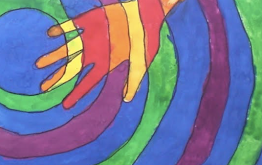
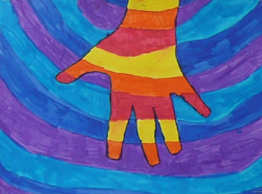
WARM AND COOL COLORED HANDS
Warm And Cool Colored Hands

Learning Targets
I can...
- Create an original Warm And Cool Colored Hands using drawing techniques learned in class
- Use warm/cool colors (red orange yellow; green blue purple), shape variation (free form, organic, geometric), and space (positive, negative) inspired by English Artist (1898-1986) Henry Moore
- Use figure techniques (gesture, contour, movement lines) and design principles (composition, proportion, repetition) based on Modern Art
- Define Figure (drawing human form in various shapes and postures using any drawing medium)
Lesson One
Day One, Art Start
1. The Artist's Hand III (1979) Henry Moore

2. Read Hands by Lois Ehlert

3. Discussion Questions "How do artists know if a color is warm or cool? What are the primary colors? Do you see any differences between warm and cool colors? What type of temperature do you think blue has? What type of temperature do you think red has? How accurate were your predictions where mixing colors? What colors remind you of fire? What comes to mind when you think of something cold? What kinds of images would you choose? How do each of these pictures make you feel? What would happen if you used opposite colors? Do you notice how the warms colors advance and the cool colors recede? How are complementary colors used?"
Lesson Activities
1. Choose 12" by 15" Drawing Paper
2. Draw three outlines of hands using drawing techniques (contour line, outline, continuous) for hand drawings
3. Add line types (horizontal, vertical, diagonal) to positive space (hand) and negative space (background) for Warm And Cool Colored Hands
Day Two, Art Start
1. Retrieve Warm And Cool Colored Hands for Assigned Table
2. The Artist's Hand (1986) Henry Moore

3. Discussion Questions "What types of lines are in this artwork? What types of colors are in this artwork? How does your eye move through this artwork? What choices did the artist make to make that happen? How would you describe this artwork to someone who has never seen it? Who do you think this artwork was created for? What do you think this artist is trying to say in this artwork? What is the meaning or message? What emotions do you notice in this artwork? What emotions do you feel when looking at this? How do you think the artist was feeling when he created this artwork? How did the artist use line, shape, and color to contribute to the mood or meaning? What type would you give this artwork? What symbols do you notice in the artwork?"
Lesson Activities
1. Use drawing techniques (contour line, outline, continuous) to add basic shapes (geometric, organic) to positive space (hand) of hand drawings
2. Use drawing techniques (contour line, outline, continuous) to add basic shapes (geometric, organic) to negative space (background) of hand drawings
3. Use drawing techniques (contour line, outline, continuous) to add details (movement lines, repetition) to Warm And Cool Colored Hands
Day Three, Art Start
1. Retrieve Warm And Cool Colored Hands for Assigned Table
2. Set Up Studio Area (markers, erasers, pencils)
Lesson Activities
1. Use warm colors (red orange yellow) to fill in the positive space (hands) of the hand drawings
2. Use cool colors (blue green purple) to fill in the negative space (background) of the hand drawings
3. Add patterns (wavy, curved, swirl) to the positive space (hands) of the Warm And Cool Colored Hands
Artist Examples


 Student Examples


 Posts
Posts

