Friday, January 6, 2023
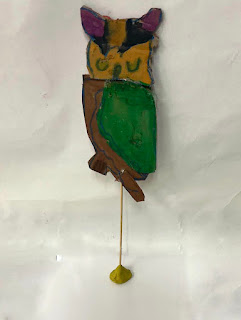
CLARE YOUNGS JUNK BIRDS
Clare Youngs Junk Birds Learning Targets

I can...
- Create an original Clare Youngs Junk Birds using drawing techniques learned in class
- Use form (two dimensional, three dimensional), shape variation (geometric, organic, free form), and space (positive, negative) inspired by Contemporary Artist (2009-Present) Clare Youngs
- Use sculpture techniques (carving, assemblage, casting) and design principles (balance, harmony, unity) based on Contemporary Art
- Define Sculpture (two and three dimensional form made by carving, casting, or shaping)
Lesson One
Day One, Art Start
1. Love Birds (2022) Clare Youngs

2. Read National Wildlife Federation's World Of Birds by Kim Kurki

3. Discussion Questions "Do any of you hunt or help your parents outside in the garden? Did you ever think that hunting, gardening, and art could be combined? Where are these birds from? How do artists make money with this artwork? What was the purpose in making this kind of artwork? What materials or mediums did this artist use? What is the style of this artwork? What shapes, colors, and sizes of birds do you notice? What geometric shapes could be put together to form a simple bird shape? What sizes and shapes do birds come in?"
Lesson Activities
1. Choose Three 12 X 12 Cardboard Sheets
2. Use three compositional elements (shape, color, texture) to represent a memory, place, or event from history for bird sculptures
3. Use line variation (wavy, curved, straight) as a design principle (balance, composition, repetition) within ones own Clare Youngs Junk Birds
Day Two, Art Start
1. Retrieve Clare Youngs Junk Birds for Assigned Tables
2. Golden Owl (2022) Clare Youngs

3. Discussion Questions "Can you believe this is made out of cardboard? what sketch, figure, or nature inspired the artists work? what is anthropomorphism? What does the animal imagery symbolize or represent? What metaphors are shown throughout the artists work? When looking at tis work, what captures the eye of the viewer? What do you think is happening in this composition? What action do you see? How does this action contribute to the feeling of the piece? What else do you see antis sculpture? How would you describe the expressions on the faces? Does this work look natural, representation, or is it stylized? How does this work make you feel? What techniques were used to create this piece? How is the artist telling us a story? How has the artist set the scene or developed these characters?"
Lesson Activities
1. Use compass, protractor, and texture plates to add symmetrical shapes and expressive lines to bird sculptures
2. Use form (two dimensional, three dimensional) to fill in the positive space (animal) of the bird sculptures
3. Use form (two dimensional, three dimensional) to fill in the negative space (base) of the Clare Youngs Junk Birds
Day Three, Art Start
1. Retrieve Clare Youngs Junk Birds For Assigned Tables
2. Set Up Studio Area (glue bottles, cardboard, push pins)
Lesson Activities
1. Use scissors to cut out two dimensional symmetrical shapes to create a three dimensional cardboard bird sculpture
2. Glue down three dimensional symmetrical shapes to create a three dimensional cardboard bird sculpture
3. Add decorations (old art, newspaper, fabric scraps, colored paper, buttons, collage bits) to the positive space (animal) of the Clare Youngs Junk Birds
Artist Examples
 Student Examples




Thursday, August 5, 2021
CLAY WIZARDS
Clay Wizards

I can...
- Create an original Clay Wizard using sculpture techniques learned in class
- Use form (two dimensional, three dimensional), shape (geometric, organic), and texture (rough, smooth) inspired by (1939) The Wizard of Oz
- Use ceramic techniques (hand building coil method slab method) and design principles (movement repetition proportion) based on American Film
- Define Imagination (forming new ideas, images, or concepts that are not present to the senses)
Lesson One
Day One, Art Start
1. The Wizard Vainamoinen (2015) Celestial Images

2. Read Neville the Imagination Wizard by Tanya Latter

3. Discusion Questions "Which wizard was the supporter of King Arthur? In Lord of the Rings, which wizard is the most powerful? What is the name of the good witch in Wizard of Oz? Which little green character is the most powerful wizard in the Star Wars films? Who is the evil wizard and FGrans Vizier of Agrabah in the film Aladdin? Which sorceress is the energy of Merlin and King Arthur? Who is the weird wizard in the Cinematic Universe? Which wizard turns from good to bad in the Lord of the Rings? Which witch curses the princess aurora in sleeping beauty?"
Lesson Activities
1. Add lines for proportion (head body staff) within the silhouette of the wizard sculptures
2. Mold clay into basic shapes (cylinder, cone, pyramid) for the positive space (body) of the wizard sculptures
3. Use modeling tools to draw facial features (eyelashes, eyelids, freckles) within the silhouette of the Clay Wizards
Day Two, Art Start
1. Retrieve Clay Wizard for Assigned Table
2. The Dagda (2018) Kevin Mclaughlin

3. Discussion Questions "How does the wizard look? How do you think the artist drew this wizard? What do you know about wizards? What did you notice that is different about this book? What can you learn from viewing this artwork? Why did the artist use those colors and background for the wizard? What does it mean to be a wizard? What do wizards symbolize? What special features do wizards have?"
Lesson Activities
1. Add facial features (eyelashes, eyelids, beard) within the silhouette of the Clay Wizard
2. Add details (robe, staff, hat) to the positive space (body) of the wizard sculptures
3. Use modeling tools (brush grip paddle) to smooth out the facial features (eyelashes, eyelids, freckles) of the Clay Wizards
Day Three, Art Start
1. Retrieve Clay Wizard for Assigned Table
2. Set Up Studio Area (rubber mat, modeling tools, clay)
Lesson Activities
1. Add tempera paint (red yellow orange) to the positive space (body) of the wizard sculptures
2. Add tempera paint (blue green purple) to the negative space (background) of the wizard sculptures
3. Apply Gloss finish to the facial proportions, facial features, and accessories of the Clay Wizards
Artist Examples

Student Examples


Tuesday, August 3, 2021
AARON ZENZ CLAY MONSTERS
Aaron Zenz Clay Monsters

Learning Targets
I can...
- Create an original Aaron Zenz Clay Monster using sculpture techniques learned in class
- Use form (two dimensional three dimensional), shape (geometric organic), and texture (rough smooth) inspired by Michigan Illustrator (2011-Present) Aaron Zenz
- Use language arts connections (storyboards illustration commercial design) and design principles (proportion balance movement) based on Illustration
- Define Illustration (a picture visually interpreting text, concepts, or process in published media)
Lesson One
Day One, Art Start
1. The Flower Keeper (2018) Aaron Zenz

2. Read Monsters Go Night-Night by Aaron Zenz

3. Discussion Questions "How do monster get ready for bed? What kind of pajamas do monsters wear? What do monster take baths with? Which snacks do monster eat? If you had a monster, what would your monster look like? How would your monster act and sound? When have you been in a situation where it was a long time for one person and short time for another? What do you do at night to help you get to sleep? What do you say and do to help meet a friend's needs? What should a friend say or do? Can a monster be good? When should you compromise, and when is it important to insist on what you want?"
Lesson Activities
1. Add lines for proportion (head, body, tail) within the silhouette of the monster sculptures
2. Mold clay into basic shapes (cylinder, cone, pyramid) for the positive space (body) of the monster sculptures
3. Use modeling tools to draw facial features (eyelashes, eyelids, freckles) within the silhouette of the Aaron Zenz Clay Monsters
Day Two, Art Start
1. Retrieve Aaron Zenz Clay Monsters for Assigned Tables
2. ChubbJaw (2017) Aaron Zenz

3. Discussion Questions "Will your monster be mean, nice, silly, scary, or happy? How do you make a scary mouth? What do silly eyes look like? What type of pattern will you add onto the monster? Are monster real? Where do monsters live? What role do monsters play in various cultures and how are they reflected in various art forms? How have monsters been viewed, what purpose do they serve, and why are they necessary? How does a monster look? What are some things you might do if you were in the same situation? Could this book be a story that someone made up?"
Lesson Activities
1. Add facial features (eyelashes, eyelids, freckles) within the silhouette of the Aaron Zenz Clay Monsters
2. Add details (pattern, gills, swirls) to the positive space (body) of the monster sculptures
2. Use modeling tools (brush grip paddle) to smooth out the facial features (eyelashes, eyelids, freckles) of the Aaron Zenz Clay Monsters
Day Three, Art Start
1. Retrieve Aaron Zenz Clay Monsters for Assigned Tables
2. Set Up Studio Area (rubber mat, paintbrushes, water bucket)
Lesson Activities
1. Add tempera paint (red yellow orange) to the positive space (body) of the monster sculptures
2. Add tempera paint (blue green purple) to the negative space (background) of the monster sculptures
3. Apply Gloss Finish to the facial proportions, facial features, and accessories of the Aaron Zenz Clay Monsters
Artist Examples


 Student Examples


Monday, August 2, 2021
HERMIT CRAB HOMES
Hermit Crab Homes

Learning Targets
I can...
- Create an original Hermit Crab Homes using sculpture techniques learned in class
- Use form (two dimensional, three dimensional), shape variation (cylinder, cone, pyramid), and texture (rough smooth) inspired by Japanese Artist (1938-Present) Aki Iomata
- Use ceramic techniques (coil method, slab method, slip and score) and design principles (composition repetition proportion) based on Contemporary Art
- Define Three Dimensional (space defined through the dimensions of height, width, and depth)
Lesson One
Day One, Art Start
1. White Chapel (2014) Aki Inomata

2. Read A House for a Hermit Crab by Eric Carle

3. Discussion Questions "Should artists draw boundaries between art and personal life? How do you think people react to her work? Why not hand over a shelter to a hermit crab? What is a hermit crab? What is a natural habitat for a Hermit Crab? How do these different animals move through the ocean? What is a habitat? Which sea animal and habitat might a hermit crab want to use for its next habitat? What ways are you like a hermit crab? Which animals were in the story?"
Lesson Activities
1. Add lines for proportions (head, pinches, shell) within the silhouette of the hermit crab sculptures
2. Mold clay into basic shapes (cylinder, cone, pyramid) for the positive space (body) of the hermit crab sculptures
3. Use modeling tools to draw facial features (eyelashes, eyelids, freckles) within the silhouette of the Hermit Crab Homes
Day Two, Art Start
1. Retrieve Hermit Crab Homes for Assigned Tables
2. Satoyama (2018) Aki Inomata

3. Discussion Questions "What is a Hermit Crab? How small or larger can Hermit Crabs grow? How many varieties of Hermit Crab are there? How long can Hermit Crabs live? Why do Hermit Crabs need shells? Why did the artist use those colors and background for the Hermit Crab? Why do you think is beautiful about this artwork? What can you learn from viewing this artwork?"
Lesson Activities
1. Add facial features (eyelashes, eyelids, freckles) within the silhouette of the Hermit Crab Homes
2. Add details (patterns, gills, swirls) to the positive space (body) of the hermit crab sculptures
3. Use modeling tools (brush grip paddle) to smooth out the facial features (eyelashes, eyelids, freckles) of the Hermit Crab Homes
Day Three, Art Start
1. Retrieve Hermit Crab Homes for Assigned Tables
2. Set Up Studio Area (rubber mat, paintbrushes, water bucket)
Lesson Activities
1. Add tempera paint (red yellow orange) to the positive space (body) of the hermit crab sculptures
2. Add tempera paint (blue green purple) to the negative space (beach) of the hermit crab sculptures
3. Apply Gloss Finish to the facial proportions, facial features, and accessories of the Hermit Crab Homes
Artist Examples


Student Examples


 Posts
Posts

