Thursday, November 17, 2022
PRINTED FENCE WITH FLOWERS
Printed Fence With Flowers

Learning Targets
I can...
- Create an original Printed Fence With Flowers using drawing techniques learned in class
- Use line types (horizontal, vertical, diagonal), shape variation (geometric, organic, free form), and space (positive, negative) inspired by French Painter (1840-1926) Claude Monet
- Use printmaking techniques (etching, engraving, woodcut, lithography) and design principles (contrast, balance, proportion) based on Impressionism
- Define Monoprint (a form of printmaking where the image can only be made once)
Lesson One
Day One, Art Start
1. The Garden Gate At Vetheuil (1881) Claude Monet

2. Read Extraordinary Garden by Sam Boughton

3. Discussion Questions "How can sharing your gifts with others make things extraordinary? How did Joe feel before and after he started his garden? How do you think Hoe's neighbors felt the njoe shared his garden with them? What do you have that you could share that might bring joy to thatchers? What does Joe create with his imagination? What was the thing that helped Joe bring his idea to life? How long do you think it took for his idea to grow? How long do you think it took for his seed to grow? Who does he share his plants with? Can you think of other words to describe something as ordinary? Are there ordinary colors that were used?"
Lesson Activities
1. Choose 12" X 15" Watercolor Paper
2. Use line types (horizontal, vertical, diagonal) to fill in the positive space (foreground) of the flower garden designs
3. Add scenery (blue sky, wooden fence, insects) to the positive space (foreground) of the Printed Fence With Flowers
Day Two, Art Start
1. Retrieve Printed Fence With Flowers for Assigned Table
2. The Pond With Ducks In Autumn (1873) Claude Monet

3. Discussion Questions "What do you think extraordinary means? How can you take ordinary activities and make them extraordinary? What is it? How does it work? Does it have extraordinary colors? Can you use it, or is it just a cool, silly thing to look at? Where would you place the seeds in your house? Would you place them under the stairs, behind the sofa, or inside a sock? Where is the silliest place you can think of to find a seed? Is there a real seed somewhere in your house? Could you plant the seed? What will grow in your garden? What colors will be there? Will there be water in your garden, a waterfall, or a river?" What amazing animals might be in your garden? Who will you share this space with?"
Lesson Activities
1. Add flowers (roses, carnations, tulips, irises, sunflowers) to the positive space (foreground) of the flower garden designs
2. Add details (clouds, sun, birds) to the negative space (background) of the flower garden designs
3. Use black sharpie marker to outline the foreground, middle ground, and background of the Printed Fence With Flowers
Day Three, Art Start
1. Retrieve Printed Fence With Flowers for Assigned Tables
2. Set Up Studio Area (watercolor, buckets, colored pencils)
Lesson Activities
1. Use color combinations (analogous, secondary, complementary) to fill in the positive space (foreground) of the flower garden designs
2. Use color combinations (analogous, secondary, complementary) to fill in the negative space (background) of the flower garden designs
3. Add highlights (reflective light, light source) and shadows (reflective shadow, cast shadow) to the positive space (foreground) of the Printed Fence With Flowers
Artist Examples 


 Student Examples


Monday, August 16, 2021
LISA CONGDON FLOWERS
Lisa Congdon Flowers

Learning Targets
I can...
- Create an original Lisa Congdon Flowers using collage techniques learned in class
- Use line types (wavy, curved, straight), shape variation (circle, oval, rectangle) and space (positive negative) inspired by American Artist (1968-Present) Lisa Congdon
- Use drawing techniques (blending smoothing smudging) and design principles (balance proportion contrast) based on Illustration
- Define Artistic Voice (style, skill, subject matter, and medium of an artist)
Lesson One
Day One, Art Start
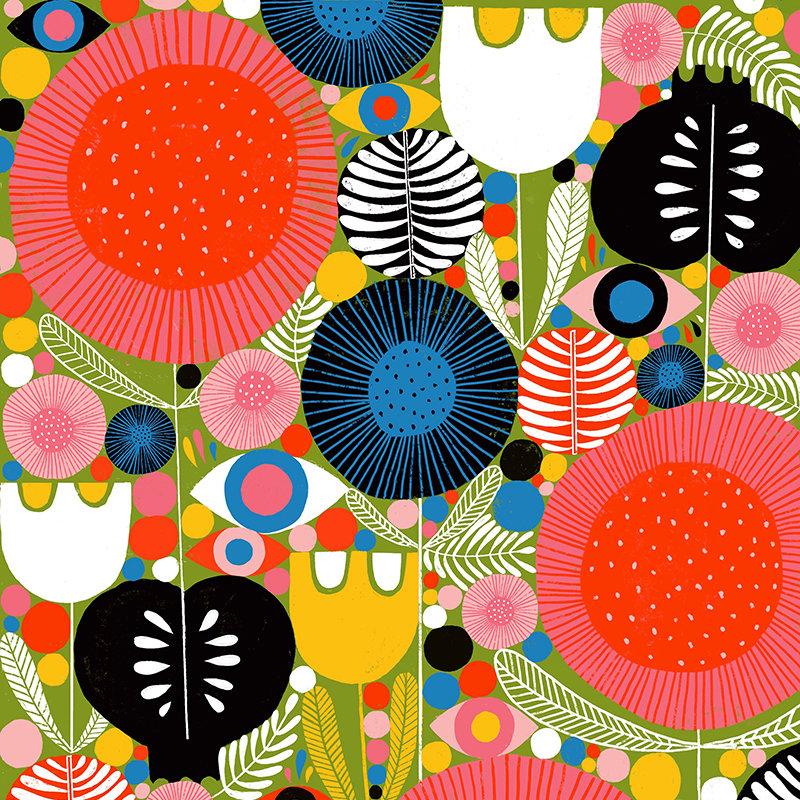
1. Eyes In The Garden (2021) Lisa Congdon
2. Read Find Your Artistic Voice: The Essential Guide To Working Your Creative Magic (Art Book for Artists, Creative Self-Help Book) by Lisa Congdon

3. Discussion Questions "How did you find an artistic voice? How do artists make time and space for making work? How do artists set vision and goals for all aspects of life? How can artists make space for work? How do artists manage their work? How can spreadsheets and time blocking help make an artist more productive? How do artists start creating? What three key pieces of advice would you give to an artist starting out? Where do artists main source of inspiration come from?"
Lesson Activities
1. Choose 12" X 15" Drawing Paper
2. Use line types (horizontal, vertical, diagonal) to draw positive space (flower) of the flower compositions
3. Use analogous colors (red orange purple) to fill in the positive space (flower) of the Lisa Congdon Flowers
Day Two, Art Start
1. Retrieve Lisa Congdon Flowers for Assigned Table
2. Wildflowers (2020) Lisa Congdon

3. Discussion Questions "What type of flower would you be? How many flowers can you identify? Do you know the names of all these flowers? How many different colors can you find on this flower? Are some of the flowers more colorful than others? How would you describe the shape of the petals? Are the petals of each flower the same shape? How many petals does this flower have? How would you describe the center of this flower? Where did you find each flower? How would you describe it? How would you describe its stem, petals, or leaves? Is the flower part of something else or is it growing by itself? Are there more flowers like this one nearby? If you gently touch this flower, how does it feel? Are parts of it smooth or rough? What kind of flower do you think this is? How are the flowers the same? How are the flowers different?"
Lesson Activities
1. Add shape variation (geometric, organic, free form) to negative space (background) of the flower composition
2. Use patterns (swirls zig zag stripes) to add a design to the negative space (background) of the flower composition
3. Use chalk to blend patterns (swirls zig zag stripes) for the negative space (background) of the Lisa Congdon Flowers
Day Three, Art Start
1. Retrieve Lisa Congdon Flowers for Assigned Table
2. Set Up Studio Area (chalk pastels, colored pencil, erasers)
Lesson Activities
1. Blend analogous colors (red orange purple) for the positive space (flower) of the flower compositions
2. Add highlights (light source reflective light) to the positive space (flower) of the flower compositions
3. Add illusion of depth by adding details (petals glitter sprinkles) to the positive space (foreground) of the Lisa Congdon Flowers
Artist Examples

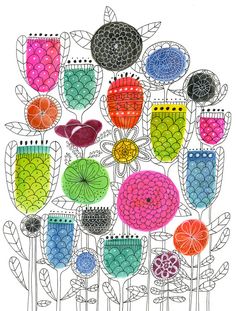

Student Examples


Monday, April 2, 2018
MONET FLOWER GARDEN
Monet Flower Garden

Learning Targets
I can...- Create a Monet Flower Garden using techniques learned in class
- Use geometric shapes (circle, triangle, oval), visual texture (grass, stone, wood) and line variation (horizon line, outline, diagonal line) inspired by French Impressionist (1840-1926) Claude Monet
- Understand historical places (Garden of Giverny, Rijnsburg Windmill, Rouen Cathedral) and design principles (repetition, competition, balance) based on Impressionism
- Define Landscape (a picture showing coutryside or land scenery)
Lesson One
Day One Art Start
1. Flower Beds at Vetheuil (1878) Claude Monet
Lesson Activities
1. Choose 12" by 15" Watercolor Paper2. Draw a horizon line in the middle of the white watercolor paper
3. Add scenery (ocean, blue sky, wooden fence in garden) to background of Monet Garden
Day Two, Art Start
1. Retrieve Monet Flower Garden for Assigned Table2. Flowers by the Pond (1915) Claude Monet

Lesson Activities
1. Add flowers (roses, carnations, tulips, irises, sunflowers) to middle ground of garden2. Add patio (chairs, table, flag pole) to foreground of Monet Flower Garden
3. Use black sharpie marker to outline foreground, middle ground, and background of garden
Day Three, Art Start
1. Retrieve Monet Flower Garden for Assigned Table2. Set Up Studio Area (watercolor, buckets, colored pencils)
Lesson Activities
1. Use watercolor to fill in positive space of flower garden2. Use watercolor to fill in negative space of flower garden
3. Add highlights/shadows with colored pencil to Monet Flower Garden
Artist Examples


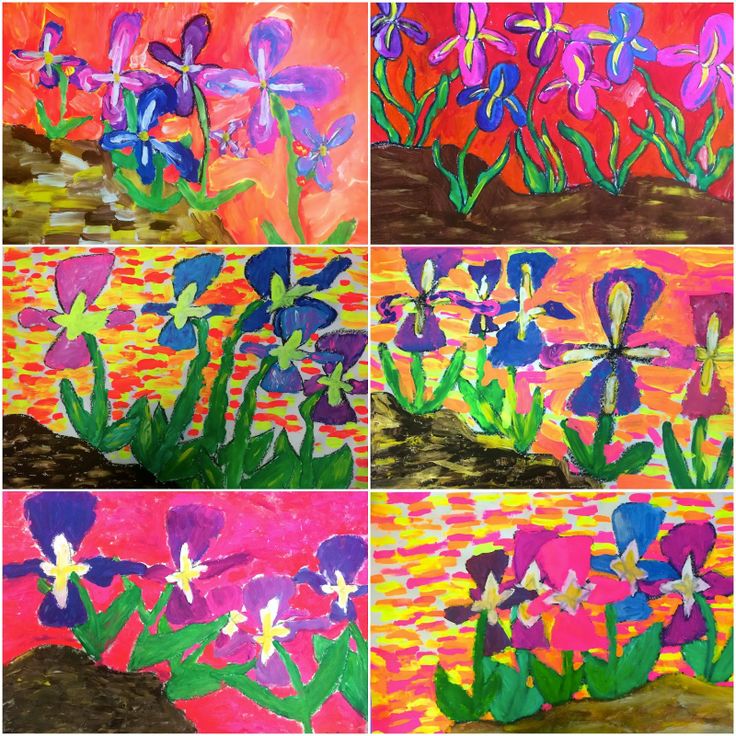

Student Examples


 Posts
Posts

