Thursday, October 6, 2022
PERSONALITY PIRANHAS
Personality Piranhas

Learning Targets
I can...
- Create an original Personality Piranhas using drawing techniques learned in class
- Use color combinations (analogous, complementary, neutral), shape variation (geometric, organic, free form), and line types (horizontal, vertical, diagonal) inspired by German Explorer (1804-1865) Robert H. Schomburgk
- Use texture (actual, implied, visual) and design principles (repetition, movement, emphasis) based on 19th Century Art
- Define Personality (combination of characteristics or qualities that form an individual)
Lesson One
Day One, Art Start
1. Serrasalmo Piranha (1804) Robert H. Schomburgk

2. Read Piranhas Don't Eat Bananas by Aaron Blabey

3. Discussion Questions "What words do you think best describe you? What do you love doing that makes you feel the happiest? What do you know how to do that you can tech others? What is the most wonderful thing that ever happened to you? What is the most difficult thing that ever happened to you? What did you learn from the best thing that ever happened to you? What did you learn from the most difficult thing that ever happened to you? What do you think will be the most useful thing when you are an adult? what advice would you give your younger self? What are you most grateful for? What do you think your life will be like in the future? How would you change the world if you could?"
Lesson Activities
1. Use a pencil to draw shape variation (geometric, organic, free form) of the selected fish (piranha) for the piranha paintings
2. Use line types (horizontal, vertical, diagonal) to add characteristics (gills, eyes, fins) for the piranha paintings
3. Use texture tools (stamps, felt pens, forks) to add patterns (dots, stripes, waves) to the positive space (piranha) of the Personality Piranhas
Day Two, Art Start
1. Retrieve Personality Piranhas for Assigned Table
2. Serrasalmo Punctatus (1804) Robert H. Schomburgk

3. Discussion Questions "How would you describe the shape of the fishes body? Are all of the fish shaped the same? Do you see any fins on this fish? How would you describe the shape of the fish? How would you describe the color of this fish? Are all fish the same color? How are these fish the same/? How are these fish different? Do you see any designs on this fish? Do you see any patterns on this fish? DO you see any fins on this fish? Are the fins the same size? Are some of the fins narrow? Are some of the fins wide? What personality do you think this fish has? How would you describe the personality? How would you describe its mouth? How would you describe the eyes?"
Lesson Activities
1. Use complementary colors (red, green; blue, orange; purple, yellow) to fill in the positive space (piranha) of the piranha paintings
2. Use complementary colors (red, green; blue, orange; purple, yellow) to fill in the negative space (background) of the piranha paintings
3. Add line types (horizontal, vertical, diagonal) to the positive space (piranha) and negative space (background) of the Personality Piranhas
Day Three, Art Start
1. Retrieve Personality Piranhas for Assigned Table
2. Set Up Studio Area (water bucket, paint brushes, tempera paint)
Lesson Activities
1. Add highlights (reflective light, light source) to the positive space (piranha) of the piranha paintings
2. Add shadows (cast shadow, reflective shadow) to the negative shape (background) of the piranha paintings
3. Add relief pieces (Styrofoam pieces, cardboard, poster board) for the positive space (piranha) and negative space (background) of the Personality Piranhas
Artist Examples


 Student Examples


Wednesday, October 5, 2022
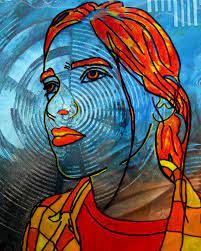
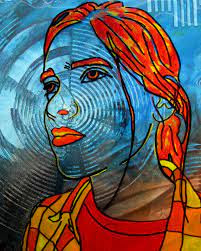
BISA BUTLER SELF PORTRAITS
Bisa Butler Self Portraits

Learning Targets
I can...
- Create an original Bisa Butler Self Portraits using printmaking techniques learned in class
- Use line variation (continuous, contour, outline), shape types (geometric, organic, free form), and texture (actual, implied, visual) inspired by American Fiber Artist (1973-Present) Bisa Butler
- Use drawing techniques (cross hatching, stippling, scribbling) and design principles (balance, portion, harmony) based on Fiber Art
- Define Portrait (a painting or drawing of the face, head, and shoulders)
Lesson One
Day One, Art Start
1. The Tea (2017) Bisa Butler

2. Read "Bisa Butler: Portraits" by Erica Warren

3. Discussion Questions "Do you think this is a self-portrait? How does this portrait make you feel? Are you interested in the portrait? Do you like the way the artist has arranged the picture? Do you like the way the artist has shown details? Can you predict if a male or female artist created this portrait? What is a portrait? Why do artist paint portraits? Who is the person in the portrait? How old is the person? What does the picture tell you about the time that the subject was made? How do you think the artist felt about the person he or she painted? How do you think the person in the picture is feeling? What is the mood of the person in the picture? How can you tell?"
Lesson Activities
1. Choose 12" X 15" Drawing Paper
2. Use graphite pencil to draw line types (contour, outline, continuous) of facial proportions (head, face shoulder) of self portrait
3. Use graphite pencil to add facial features (eyes, nose, mouth, eyebrows) to the positive space (portrait) of the Bisa Butler Self Portraits
Day Two, Art Start
1. Retrieve Bisa Butler Self Portraits for Assigned Tables
2. The Princess (2017) Bisa Butler

3. Discussion Questions "How has the artist arranged the portrait? Do you think the person posted for this portrait? Where is the person looking (at the viewing, away, at something else)? If there is more than one person in the picture, are they touching? What could this mean? What does the background and the objects in the background of the picture tell us? How much space has the artist left around the person? How is the space being used? What view of the person is pictured? Is the portrait realistic or is the portrait abstract? What shapes can you see in this portrait? Are the lines in the portrait straight or curved? How often does the artist repeat certain colors or shapes within the portrait?"
Lesson Activities
1. Add adornments (piercings, tattoos, hairstyles) to the positive space (portrait) of the self portrait
2. Add costumes (jewelry, clothing, make up) to the positive space (portrait) of the self portraits
3. Use black sharpie marker to outline the face features (eyes, nose, mouth) and facial proportions (head, face, shoulder) of the Bisa Butler Self Portraits
Day Three, Art Start
1. Retrieve Bisa Butler Self Portrait for Assigned Table
2. Set Up Studio Area (acetate, sharpie markers, pens)
Lesson Activities
1. Use primary colors (red yellow blue) to fill in the positive space (clothing, jewelry, facial features) of the self portrait
2. Use primary colors (red blue yellow) to fill in the negative space (background) of the self portrait
3. Use value (lightness, darkness) to add shadows (reflective shadow, cast shadow) and highlights (reflective light, light source) to the Bisa Butler Self Portraits
Artist Examples


 Student Examples


Friday, October 23, 2020
ANDY WARHOL INSPIRED CATS
Andy Warhol Inspired Cats

Learning Targets
I can...
- Create an original Andy Warhol Inspired Cat using drawing techniques learned in class
- Use color combinations (complementary secondary primary), shape variation (free form organic geometric), and space (positive negative) inspired by American Artist (1928-1987) Andy Warhol
- Use drawing techniques (cropping overlapping layering) and design principles (composition proportion repetition) based on Pop Art
- Define Features (stylistic elements included within an artwork to help the artist communicate)
Lesson One
Day One, Art Start
1. Green Sam (1956) Andy Warhol

2. Read Uncle Andy's Cats by James Warhola

3. Discussion Questions "Do cats have shoulders? Why do cats purr? Why do cats have whiskers? what is a group of cats called? What is the normal eye color of a siamese car? Which cats are cartoons? What is the largest "big cat" in the world? Do cats spend an average of 13 to 14 hours a day sleeping? How many whiskers does the average cat have on each side of its face? What is the average number of kittens in a litter? Which part of the cat's body can appear and disappear? What was the punishment for hurting a cat in ancient Egypt? What is the name of the world's richest cat? Which part of a cat is as unique as a human fingerprint?"
Lesson Activities
1. Choose 12" X 15" Drawing Paper
2. Use basic shapes (semi circle oval triangle) to draw recognizable parts of the cat drawings
3. Add feline parts (claws teeth tail whiskers nose) to the recognizable parts of the Andy Warhol Inspired Cats
Reminder:
- Initials & Home Teacher on Back Of Paper
Day Two, Art Start

Lesson Activities
Day Three, Art Start
Lesson Activities
Artist Examples


 Student Examples


Wednesday, February 12, 2020
ROY LICHTENSTEIN PORTRAITS
Roy Lichtenstein Portraits

Learning Targets
I can...- Create an original Roy Lichtenstein Portrait using drawing techniques learned in class
- Use primary colors (red, yellow, blue), shape variation (geometric, organic), and line types (horizontal, vertical, diagonal) inspired by American Pop Artist (1923-1977) Roy Lichtenstein
- Use drawing techniques (cross hatching, stippling) and design principles (balance, proportion, harmony) based on the Pop Art Movement
- Define Ben Day Dots (small colored dots spaced close, wide, or overlapping to create an optical illusion)
Lesson One
Day One, Art Start
1. Girl With Ball (1961) Roy Lichtenstein

Lesson Activities
1. Choose 12" X 15" Drawing Paper2. Use pencil to draw a contour line of facial proportions (head, face, shoulder) of self portrait
3. Use pencil to add facial features (eyes, nose, mouth, eyebrows) of Roy Lichtenstein Portraits
Reminders:
- Initials & Home Teacher on Back of Paper
Day Two, Art Start
1. Retrieve Roy Lichtenstein Portrait for Assigned Table2. Girl With Hair Ribbon (1965) Roy Lichtenstein

Lesson Activities
1. Add adornments (piercings, tattoos, hairstyles) to positive space (face, nose, shoulder) of portraits2. Add costumes (jewelry, clothing, make up) to positive space (facial feature) of portraits
3. Use black sharpie marker to outline facial features and facial proportions of Roy Lichtenstein Portraits
Day Three, Art Start
1. Retrieve Roy Lichtenstein Portrait for Assigned Table2. Set Up Studio Area (washable markers, rulers, pens)
Lesson Activities
1. Use primary colors (red, blue, yellow) to fill in the positive space (clothing, jewelry, facial features) of portraits2. Use primary colors (red, blue, yellow) to fill in the negative space (background) of the portrait
3. Use value (lightness/darkness of color) to add shadows/highlights to Roy Lichtenstein Portraits
Artist Examples

 Student Examples


Saturday, December 1, 2018
HERITAGE SELF PORTRAITS
Heritage Self Portraits

Learning Targets
I can...- Create an original Heritage Self Portrait using drawing techniques learned in class
- Use multicultural colors (apricot, burnt Sienna, mahogany, peach, sepia, tan), line types (contour, outline, gesture) and value (highlights, shadows) inspired by Australian Artist (1964-Present) Kim Philipsen, American Photographer (1954-Present) Cindy Sherman, and Harlem Renaissance Artist (1899-1979) Aaron Douglas
- Use observational skills (capturing expressions, developing likeness, facial placement) and design principles (balance, proportion, contrast) based on Contemporary Art Movements
- Define Identity (the sense people have of themselves, who they are, and what they feel is most important in defining themselves)
Lesson One
Day One, Art Start
1. Self Portrait with Monkey (1938) Frida Kahlo
Lesson Activities
1. Choose 12" by 15" Drawing Paper2. Use pencil to draw a contour line of facial proportions (head, face, shoulder) of self portrait
3. Use pencil to add facial features (eyes, nose, mouth, eyebrows) of Heritage Self Portrait
Reminder:
- Initials & Home Teacher on Back of Paper
Day Two, Art Start

Lesson Activities
Day Three, Art Start
Lesson Activities
Artist Examples


Student Examples


 Posts

