Thursday, August 31, 2023
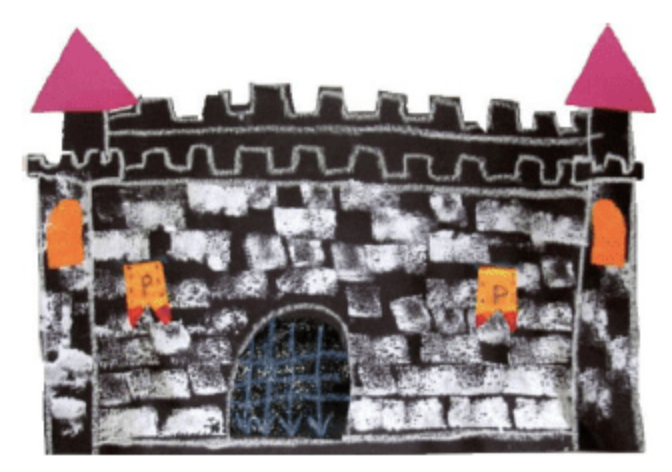
CHARCOAL HOGWARTS CASTLES
Charcoal Hogwarts Castles Learning Targets

I can...
- Create an original Charcoal Hogwarts Castle using drawing techniques learned in class
- Use neutral colors (black, grey, white), form (two dimensional, three dimensional), and value (lightness, darkness, tints, shades) inspired by wizard architects (993) Gordic Gryffindor, Helga Hufflepuff, Rowena Ravenclaw, and Salazar Sytherin
- Use architectural elements (scale, proportion, ornament) and design principles (balance, rhythm, movement) based on the Harry Potter Novel Series by J.K. Rowling
- Define Architecture (the art or practice of designing and constructing buildings)
Lesson One
Day One, Art Start
1. Hogwarts Castle (1993) J.K Rowling

2. Read Harry Potter Novel Series by J.K. Rowling

3. Discussion Questions "What is the architectural style of the Hogwarts Castles? How long did it take to build the Hogwarts Castle model? Where would you believe the Hogwarts Castle is located? Would you enroll at the Hogwarts Castle? Would you want the Hogwarts Castle to be real? Would you visit Alnwick Castle, one of the filming spots used in Harry Potter and the Philosopher's Stone? How do first years get from the Hogsmeade train station to the castle? How many floors are in the Hogwarts castle? How many staircases does Hogwarts Castles have? Who was the wizard architect behind the Hogwarts Castle? What are the functions and architectural elements of these castles?"
Lesson Activities
1. Retrieve 12" X 15" Drawing Paper
2. Draw a horizon line in the negative space (background) of the drawing paper for the castle drawings
3. Use shape variation (geometric, organic, free form) to add building elements (towers, walls, ladders, doors) to the positive space (building) of the Charcoal Hogwarts Castles
Day Two, Art Start
1. Retrieve Charcoal Hogwarts Castles for Assigned Tables
2. Hogwarts Castle Model (2012) J.K. Rowling

3. Discussion Questions "How do artists use geometric shapes to draw their castles? Do artists create patterns on their castles? Doo artists draw castles that take up most of the space on the paper? How do artists use horizon lines to create depth within a drawing? How do these castles connect to fairytale stories or architecture? What were groups of knights that protected the castle called? What are main features of a castle? How were castles built? Have you ever made a castle? What would make the best castle- height, sturdiness, or level of detail? Why were medieval castles built in medieval times? What were the first castles made out of? What was the castles purpose? What is the title of the person in charge of the affair within the castle?"
Lesson Activities
1. Use line variation (vertical, horizontal, diagonal) to add texture (bricks, stones, metal) to the positive space (castle) of the Charcoal Hogwarts Castles
2. Add architectural features (flag, moat, draw bridge, windows) to the positive space (castle) of the castle drawings
3. Use eraser to remove any guidelines from the positive space (building) of the Charcoal Hogwarts Castles
Day Three, Art Start
1. Retrieve Charcoal Hogwarts Castles for Assigned Tables
2. Set Up Studio Area (charcoal, erasers, pencils, white charcoal)
Lesson Activities
1. Use neutral colors (black, grey, white) to fill in the positive space (building) of the castle drawings
2. Use neutral colors (black, grey, white) to fill in the negative space (background) of the castle drawings
3. Add highlights (reflective light, light source) and shadows (cast shadow, shadow) to the positive space (building) of the Charcoal Hogwarts Castles
Artist Examples
 Student Examples


Tuesday, November 30, 2021
WATERCOLOR CASTLES
Watercolor Castles

Learning Targets
I can...
- Create an original Watercolor Castle using drawing techniques learned in class
- Use shape variation (geometric organic), line variation (horizontal, vertical, diagonal) and space (positive negative) inspired by Impressionist Painter (1840-1926) Claude Monet
- Use different types of patterns (swirls, stripes, floral) and design principles (composition, proportion, gradation) based on Impressionism
- Define Architecture (the practice of designing and constructing buildings)
Lesson One
Day One, Art Start
1. The Portal at Midday (1893) Claude Monet

2. Read Castles by Gillian Osband

3. Discussion Questions "How did the artist use geometric shapes to draw their castle? Did the artist create at least one pattern on their case? Did the artist use watercolor effectively? Did the artist draw a castle that takes up most of the space on the paper? Did the artist add horizon lines to give the artwork depth? How do these castles connect to fairytale stories or architecture? What were the group of knights that protected the castle called? What are the main features of a castle? How were castles built?"
Lesson Activities
1. Retrieve 12" X 15" Drawing Paper
2. Draw a horizon line in the negative space (background) of the white paper for the Watercolor Castles
3. Use geometric shapes (rectangle, squares, triangles) to add buildings parts (towers, walls, doors) to the positive space (building) of the Watercolor Castles
Day Two, Art Start
1. Retrieve Watercolor Castles for Assigned Table
2. Rouen Cathedral, Study of the Portal (1892) Claude Monet

3. Discussion Questions "Have you ever made a castle? What types of tools did you use? What would make the best castle- height, sturdiness, or level of detail? What are some materials (rocks, sticks, moats) that can be used to protect castles from the waves? What is the different between a palace and a castle? How would you build a castle in a whole day? Why were castles built in medieval times? What were the first castles made out of? What was the castle keep and what was its purpose? What was the title of the person in charge of the affairs within the castle?"
Lesson Activities
1. Use line variation (vertical, horizontal, diagonal) to add texture (bricks, stone, metal) to the positive space (castle) of the Watercolor Castles
2. Add architectural features (flag, moat, draw bridge) to the medieval castles of the Watercolor Castles
3. Use eraser to remove any guidelines from the positive space (building) of the Watercolor Castles
Day Three, Art Start
1. Retrieve Watercolor Castles for Assigned Table
2. Set Up Studio Area (colored pencil, sharpeners, erasers)
Lesson Activities
1. Use earth tones (brown red black) to fill in the positive space (building) of the castle drawings
2. Use earth tones (green blue white) to fill in the negative space (background) of the castle drawings
3. Add highlights (reflective light, light source) and shadows (cast shadow, shadow) to the positive space (building) of the Watercolor Castles
Artist Examples


 Student Examples



Wednesday, August 4, 2021
CLAY GARGOYLE
Clay Gargoyle

Learning Targets
I can...
- Create an original Clay Gargoyle using sculpture techniques learned in class
- Use form (two dimensional, three dimensional), shape (geometric, organic), and texture (rough smooth) inspired by American Artist (1963-Present) Sam Sidders
- Use ceramic techniques (slip and score, coil method, hand building) and design principles (proportion, balance, movement) based on Medieval Architecture
- Define Caricature (a picture, description, or imitation of a person in which characteristics are exaggerated for a comic effect)
Lesson One
Day One, Art Start
1. Ulmer Munster Gargoyle (2012) Sam Sidders

2. Read Anthony and the Gargoyle by Jo Ellen Bogart

3. Discussion Questions "How can improvisation and spontaneous exploration of metals positively influence the creation of artwork? What are gargoyles? What are grotesques? What happened to the story gargoyles over time? Why do buildings have gargoyles? What is a chimera? Have you ever felt like someone was watching you? Do you think you could ever create a gargoyle? If you could design your own gargoyle, what would it look like?"
Lesson Activities
1. Add lines for proportion (head, body, tail) within the silhouette of the gargoyle sculptures
2. Mold clay into basic shapes (cylinder, cone, pyramid) for the positive space (body) of the gargoyle sculptures
3. Use modeling tools to draw facial features (eyelashes, eyelids, freckles) within the silhouette of the Clay Gargoyles
Day Two, Art Start
1. Retrieve Clay Gargoyles for Assigned Table
2. The Same Old Thing (2012) Sam Sidders

3. Discussion Questions "Do you think you could ever sculpt a gargoyle out of stone? What if you could grow your own gargoyle? Did you know The Monster walks is a series of virtual tours of gargoyles that can be found in and around New York? Do you know what these statues are? Do you notice any differences between modern gargoyles and the ones created over 700 years ago? What did you observe about the old gargoyles? How are the old gargoyles and the new gargoyles different? How can you explain why happened to the old gargoyles? What made them change? Where did the stone go?"
Lesson Activities
1. Add facial features (eyelashes, eyelids, freckles) within the silhouette of the Clay Gargoyles
2. Add details (wings, claws, teeth) to the positive space (body) of the gargoyle sculptures
3. Use modeling tools (brush grip paddle) to smooth out the facial features (eyelashes eyelids freckles) of the Clay Gargoyles
Day Three, Art Start
1. Retrieve Clay Gargoyles for Assigned Table
2. Set Up Studio Area (rubber mat, modeling tools, clay)
Lesson Activities
1. Add tempera paint (red yellow orange) to the positive space (body) of the gargoyle sculptures
2. Add tempera paint (blue green purple) to the negative space (background) of the gargoyle sculptures
3. Apply Gloss Finish to the facial proportions, facial features, and accessories of the Clay Gargoyles
Artist Examples


 Student Examples


 Posts

