Tuesday, August 27, 2024
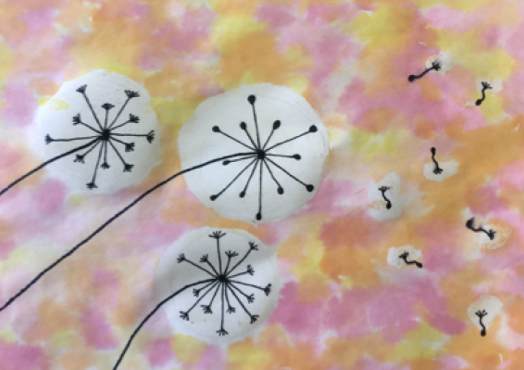
DANDELION PUFFS PAINTINGS
Dandelion Puffs Paintings

Learning Targets
I can...
- Create an original Dandelion Puffs Paintings using drawing techniques learned in class
- Use color combinations (warm colors, cool colors), line types (horizontal vertical diagonal), and shape variation (geometric, organic, free form) inspired by French Artist (1814-1875) Jean-Francois Millet
- Use painting techniques (layering, blending, dry brush, underpainting) and design principles (gradation, composition, proportion) based on Realism
- Define Composition (the way in which different elements of an artwork are combined or arranged together)
Lesson One
Day One, Art Start
1. Dandelions (1867) Jean-Francois Millet

2. Read The Dandelion Seeds Big Dream by Joseph Anthony

3. Discussion Questions "Why are dandelions considered an undesirable weed and not valued in specific environments? How does a close view of a dandelion reference rural and agricultural life? Did you know that Jean Francois Millet brought back the popularity of pastels with his artwork? Did you notice that there is one open flower showing? Where is the path of light and directional cues for taking the viewer throughout the drawing? Can you see the circular design? Can you sense the movement of the seed heads drifting apart? Why are there so many artists that paint dandelions? What do you like about dandelions? Can you think of other ways to use dandelions?"
Lesson Activities
1. Choose 12" X 15" Drawing Paper
2. Use line types (horizontal, vertical, diagonal) to draw positive space (flower, dandelion) of the flower paintings
3. Use color combinations (analogous, warm colors, cool colors) to fill in the positive space (flower) of the Dandelion Puffs Paintings
Day Two, Art Start
1. Retrieve Dandelion Puffs Paintings for Assigned Tables
2. Dandelions (1985) Yayoi Kusama

3. Discussion Questions "Did you know dandelions are edible? Did you know dandelions contact more essential vitamins than spinach? Did you know early European settlers in America used them for food and medicine? How many flowers can you see in a dandelion bloom? Can you guess how the dandelion got the name lion's teeth? Did you learn anything new about dandelions? Why do some people call dandelions weeds? How far do the seeds fly the air is still and when it is windy? Which part of the dandelion reminds you of a lion's tooth? Have you ever blown on a fluff ball of dandelion seeds? Why do you think dandelion seeds are fluffy? Do the seeds with bristles remind you of a helicopter or a parachute?"
Lesson Activities
1. Add shape variation (geometric, organic, free form) to the negative space (background) of the flower paintings
2. Use patterns (stripes, swirls, curls) to add a design to the negative space (background) of the flower paintings
3. Use chalk to blend patterns (swirls, stripes, curls) for the negative space (background) of the Dandelion Puffs Paintings
Day Three, Art Start
1. Retrieve Dandelion Puffs Paintings for Assigned Tables
2. Set Up Studio Area (paint brushes, water buckets, oil pastels, watercolor)
Lesson Activities
1. Blend color combinations (analogous, warm colors, cool colors) for the positive space (flower) of the flower paintings
2. Add highlights (light source, reflective light) to the positive space (flower, dandelion) of the flower paintings
3. Add illusion of depth by add details (glitter, petals, details) to the positive space (flower, dandelion) of the Dandelion Puffs Paintings
Artist Examples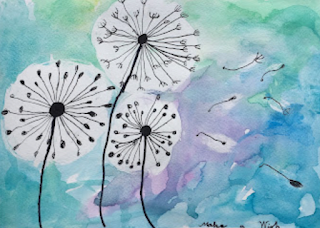


 Student Examples




Friday, November 17, 2023
ROSA BONHEUR LONGHORNS
Rosa Bonheur Longhorns

Learning Targets
I can...
- Create an original Rosa Bonheur Longhorns using drawing techniques learned in class
- Use shape variation (geometric, organic, free form), line types (horizontal, vertical, diagonal), and texture (actual, visual, implied) inspired by French Artist (1822-1899) Rosa Bonheur
- Use shading techniques (cross hatching, stippling, scumbling, hatching) and design principles (contact, balance, proportion) based on Realism
- Define Detail (a distinctive feature of an object or scene which can be seen mostly clearly up close)
Lesson One
Day One, Art Start
1. Longhorn Bull In A Landscape (1896) Rosa Bonheur

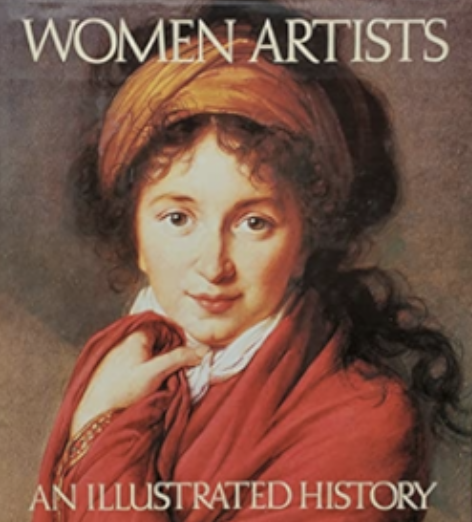
2. Read Women Artists: An Illustrated History" by Nancy Heller
3. Discussion Questions "Can you imagine having to get written permission from the police to dress in the kind of clothes you want to wear? Would people find that strange in society today? Can you find some of these animals in this drawing of her studio? Which animal will be featured? Where do you see dark colors? If we divided this painting down the middle, would the two sides balance each other? How does she paint the animals to appear realistic? What would you say is the main subject of this painting besides the land? Are the farmers as important? Why not? In what direction, do your eyes move in this composition? Where does texture catch your eyes? How does that textured area contrast with other parts of the painting? Have you ever been horseback riding? Would the size make the horses seem even more lifelike? Do you see more straight lines or curved lines? What other details in the painting show movement?"
Lesson Activities
1. Choose 12" X 15" Painting Paper
2. Use basic shapes (circle, oval, triangle) to fill in the positive space (foreground) of the longhorn drawings
3. Add bull parts (horns, spots, hair) to the negative space (background) of the Rosa Bonheur Longhorns
Day Two, Art Start
1. Retrieve Rosa Bonheur Longhorns for Assigned Tables
2. Plowing In The Nivernals (1849) Rosa Bonheur

3. Discussion Questions "What cow caught your eye first? Did you notice the black and white animal in the middle that are rearing up? What is a study? Do you think this would be a good pet for you to have at home? Do you think it took her a long time to paint all those lines of color? Which prop do you think would be more interesting, a table or a bull? What did Rosa Bonheur paint throughout her career? What was the very first painting Rosa exhibited in Paris? How did Rosa Bonheur paint animals? Who is Buffalo Bill? What is the name of her most famous artwork? How does Rosa Bonheur create a feeling of movement with her cows? "
Lesson Activities
1. Add patterns (stripes, dots, swirls, waves) to the positive space (foreground) of the longhorn drawings
2. Use neutral colors (black, white, grey, brown) to fill in the negative space (background) of the longhorn drawings
3. Use neutral colors (black, white, grey, brown) to fill in the positive space (foreground) of the Rosa Bonheur Longhorns
Day Three, Art Start
1. Retrieve Rosa Bonheur Longhorns for Assigned Tables
2. Set Up Studio Area (charcoal, white colored pencils, erasers)
Lesson Activities
1. Add highlights (reflective light, light source, highlights) to the positive space (foreground) of the longhorn drawings
2. Add shadows (reflective shadow, cast shadow, shadow) to the negative space (background) of the longhorn drawings
3. Add repeating patterns (dots, stripes, swirls, spots) to the negative space (background) of the Rosa Bonheur Longhorns
Artist Examples


 Student Examples


Tuesday, September 19, 2023
VALUE SNOW LANDSCAPES
Value Snow Landscapes

Learning Targets
I can...
- Create an original Value Snow Landscapes using drawing techniques learned in class
- Use shape variation (geometric, organic, free form), line types (horizontal, vertical, diagonal), and value (lightness, darkness) inspired by Russian Painter (1877-1932) Ivan Fedorovich Choultse
- Use painting techniques (blending, layering, dry brush, underpainting) and design principles (gradation, composition, proportion) based on Realism
- Define Value (the lightness or darkness of a color)
Lesson One
Day One, Art Start
1. Garden Under The Snow (1920) Ivan Fedorovich Choultse

2. Read Winter Dance by Marion Dane Bauer

3. Discussion Questions "What do you notice? What would you pack for your trip (clothing, supplies, gifts)? How did the environment influence your experience? What strategies has the artist used to communicate a sense of space? What do you notice about the view we have of this scene? How might your impression of the landscape change if you were standing on the path in the foreground? What do you notice from this vantage point? What evidence of the human would you see in this landscape? How would you describe the relationship between humans and the natural world in this scene? How does your community relate to this natural environment? What similarities and differences do you notice? What opportunities or challenges might work form sketches in a studio present? How do you think the installation of this work in a dark room with concealed skylights, a huge windowlike farame, and plants impacted viewers experiences?"
Lesson Activities
1. Use pencil to draw the basic shapes (geometric, organic, free form) of the positive space (landscape) of the winter landscapes
2. Use line types (horizontal, vertical, diagonal) to add details (plants, insects, flowers) to the positive space (landscape) of the winter landscapes
3. Use line types (horizontal, vertical, diagonal) to add details (clouds, wind lines, snowflakes) to the negative space (background) of the Value Snow Landscapes
Day Two, Art Start
1. Retrieve Value Snow Landscapes from Assigned Tables
2. Rayon Du Matin, Snow Scene (1921) Ivan Fedorovich Choultse

3. Discussion Questions "Would you like living in a forest? What are some advantages to living in a forest? What are some disadvantages to living in a forest? What strikes you most about this landscape? What mood does this landscape evoke? What is the main idea of this painting? What is the focal point? Where is the highest contrast and sharpest edge? Is there a dominant color temperature in the landscape? What are the dominant atmospheric effects? What are the elements in the landscape? Where is the lightest and darkest part of the painting? What do you find inspiring about winter?"
Lesson Activities
1. Use color combinations (analogous, secondary, intermediate) to fill in the positive space (landscape) of the winter landscapes
2. Use color combinations (analogous, secondary, intermediate) to fill in the negative space (background) of the winter landscapes
3. Use line types (horizontal, vertical, diagonal) to fill in the positive space (landscape) with winter details (snowflakes, insects, plants) of the Value Snow Landscapes
Day Three, Art Start
1. Retrieve Value Snow Landscapes for Assigned Tables
2. Set Up Studio Area (water bucket, paint brushes, oil pastels)
Lesson Activities
1. Add highlights (reflective light, light source) to the positive space (landscape) of the winter landscapes
2. Add shadows (cast shadow, reflective shadow) to the negative space (background) of the winter landscapes
3. Use stop motion program (iMotion, FlipaClip, Stop Motion) to add an animation to the Value Snow Landscapes
Artist Examples
 Student Examples


Friday, September 1, 2023
TULIP PAINTINGS
Tulip Paintings

Learning Targets
I can...
- Create an original Tulip Paintings using drawing techniques learned in class
- Use line types (horizontal, vertical, diagonal), shape variation (geometric, organic, free form), and value (lightness, darkness, tints, shades) inspired by American Artist (1967-Present) Jane Jones
- Use observational techniques (vantage point, scale, perspective) and design principles (composition, movement, repetition) based on Realism
- Define Still Life (a work of art depicting mostly inanimate subject matter)
Lesson One
Day One, Art Start
1. Garden Of Joy (2016) Jane Jones

2. Read Holland Museum Getting Ready For Tulip Time With New Exhibition by Corinne Moore

3. Discussion Questions "The Tulip Time Festival is the biggest Tulip Festival in the United States. The Tulip Festival is in Holland, Michigan. The festival start in 1929. The Tulip Festival takes place in the month of May. Tulips are colorful flowers that bloom in the spring. Many people from the Netherlands lie in Holland, Michigan. The tulip flower is a special flower to the people in the Netherlands. Many tulips grow in the Netherlands. In 1976, President Gerald Ford visited the Tulip Festival. Every year the festival has music, dancing, and fireworks. Readers Digest named the festival the best small town festival in the United States. What country is the Tulip Time festival in? What state is the Tulip Time Festival in? When did the festival start? What month does the festival take place in? What country is the tulip festival special too? What president visited the Tulip Time Festival?"
Lesson Activities
1. Choose 12" X 15" Painting Paper
2. Use line types (horizontal, vertical, diagonal) to draw positive space (tulip) of the flower paintings
3. Use color combinations (analogous, complementary, secondary) to fill in the positive space (tulip) of the Tulip Paintings
Day Two, Art Start
1. Retrieve Tulip Paintings for Assigned Tables
2. Garden Party (2013) Jane Jones

3. Discussion Questions "What does a tulip look like? What can you tell about the stem and the leaves? What do the petals look like? How many kinds of flowers can you find in this painting? Do you think they all bloom at the same time, the way you see them? Can you find all three tulips in the painting? What type of flower would you be? How many flowers can you identify? Do you know the name of all these flowers? How many different colors can you find on this flower? Are some of the flowers more colorful than others? How would you describe the shape of the petals? Are the petals the same on each flower? Where did you find each flower? How would you describe it? How would you describe its stem, petals, or leaves? Is the flower part of something else or is it growing by itself? Are there more flower like this one nearby?"
Lesson Activities
1. Add shape variation (geometric, organic, free form) to the negative space (background) of the flower paintings
2. Use patterns (swirls, stripes, dots) to add a design to the negative space (background) of the flower paintings
3. Use color combinations (analogous, complementary, secondary) to blend patterns (swirls, stripes, dots) for the negative space (background) of the Tulip Paintings
Day Three, Art Start
1. Retrieve Tulip Paintings for Assigned Tables
2. Set Up Studio Area (paintbrushes, water bucket, tempera paint)
Lesson Activities
1. Blend color combinations (analogous, complementary, secondary) for the positive space (tulip) of the tulip paintings
2. Add highlights (reflective light, light source) to the positive space (tulip) of the tulip paintings
3. Add illusion of depth by adding details (petals, glitter, sprinkles) to the positive space (foreground) of the Tulip Paintings
Artist Examples


 Student Examples


 Posts

