Saturday, August 29, 2020
ELOISE RENOUF INSPIRED TREES
Eloise Renouf Inspired Trees

Learning Targets
I can...
- Create an original Eloise Renouf Inspired Trees using collage techniques learned in class
- Use analogous colors (red orange yellow; green blue purple), line variation (thick, thin, curved) and shape (free form, organic, geometric) inspired by United Kingdom Illustrator (1977-Present) Eloise Renouf
- Use textile techniques (weaving, embroidery, patchwork) and design principles (composition, repetition, contrast) based on Contemporary Art
- Define Printmaking (artistic process of transferring images from a matrix onto another surface)
Lesson One
Day One, Art Start
1. Woodland Prints (2011) Eloise Renouf

2. Read 20 Ways To Draw A Tree And 44 Other Nifty Things From Nature by Eloise Renouf

3. Discussion Questions "How would you describe Eloise Renouf work? What different types of printmaking techniques does she use in her work? Do you think her home, city, and neighborhood inspired her to create this work? What type of decorating style does she use? What colors do you see during the fall season? Why are the reds and yellows called warm colors? What memories do you have during this season? What is a collage? What season do you think these designs are inspired by? What is a textile artist?"
Lesson Activities
1. Use analogous colors (pink red orange) to cut out three different organic shapes for the tree landscapes
2. Use line types (thick, thin, curved, broken, long, short) to add tree trunks to the tree landscapes
3. Use line types (thick, thin, curved, broken, long, short) to add branches to the tree Eloise Renouf Inspired Trees
Day Two, Art Start
1. Retrieve Eloise Renouf Inspired Trees for Assigned Table
2. Spring Woodland (2015) Eloise Renouf

3. Discussion Questions "How do artists begin drawing from nature? Do artists work from life, photos, still lifes, or stuff animals? How do artists find subjects? How do nature drawings enhance nature appreciation? Are creating drawing from nature different from taking photographs from nature? What nature artists do you enjoy? What can you see up in the sky and down on the ground? What can you smell like leaves or mud? What can you hear such as birds or the wind? Is the sun warm? Is the ground rough or smooth? What patterns do you see in the leaves? What do your trees look like? What is nature journaling?"
Lesson Activities
1. Use analogous colors (green, blue, purple) to fill in the negative space (background) of the tree landscapes
2. Use metallic colors (silver, gold, bronze) to add details (berries, acorns, leaves) to the positive space (trees) of the tree landscapes
3. Use printmaking tools (scrub brushes, dusters, paint scrapers, q-tips) to add patterns to the positive space (trees) of the Eloise Renouf Inspired Trees
Day Three, Art Start
1. Retrieve Eloise Renouf Inspired Trees for Assigned Tables
2. Set Up Studio Area (glue sticks, scrapbook paper, tempera paint)
Lesson Activities
1. Add highlights (reflective light, light source) to positive space (trees) of tree landscapes
2. Add shadows (cast shadow, shadow) to negative space (background) of tree landscapes
3. Add overlapping shapes (circles, ovals, round shapes, round corned squares) to positive space (trees) of Eloise Renouf Inspired Trees
Artist Examples


 Students Examples


Saturday, August 22, 2020
CHARCOAL TREES
Charcoal Trees

Learning Targets
I can...
- Create an original Charcoal Tree using drawing techniques learned in class
- Use neutral colors (grey, black, white), shapes (geometric, organic), and value (lightness, darkness) inspired by Dutch Artist (1872-1944) Piet Mondrian
- Use drawing techniques (smudging, blending, and smoothing) and design principles (placement, proportion, composition) based on Expressionism
- Define Expressive (conveying a thought or feeling in an image)
Day Two, Art Start
1. Grey Tree (1911) Piet Mondrian

2. Read Tree Lady: The True Story of How One Tree-Loving Woman Changed a City Forever by Joseph Hopkins

3. Discussion Questions "What kind of tree is this? How old is the tree? What season is it? Has anyone tried to cut it down? What else grows nearby? Who waters the tree? Does the tree get enough sunlight? Is the tree healthy? What is a tree a symbol of? Where is the tree located? If you were in the picture, where would you be? Did you enjoy creating a tree that represented you? What makes a good scientific sketch? What details were important to include in each tree? How tall do you think the tree is? Have you noticed how different the forest looks through the different seasons? If you climbed the top of that tree and looked around, what do you think you would be able to see from there?"
Lesson Activities
- Choose 12" by 15" Drawing Paper
- Draw three thumbnail sketches of tree compositions using drawing techniques (blending, smudging, smooth) for tree drawings
- 3. Add details (leaves, acorn, hole) for positive space (tree) of the tree drawings
Day Two, Art Start
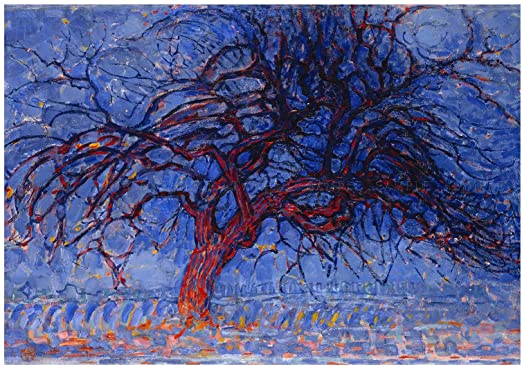
Lesson Activities
- Use drawing techniques (blending, smudging, smoothing) to add basic shapes (geometric, organic) of tree for tree drawings
- Use design principles (composition, repetition, gradation) to fill in the positive space (trunk, branches, twigs) of tree drawings
- Use drawing techniques (blending, smudging, smoothing) to add details (bark, leaves, hole) of tree drawings
Day Three, Art Start
- Retrieve Charcoal Trees for Assigned Table
- Set Up Studio Area (charcoal sticks, erasers, pencils)
Lesson Activities
- Use neutral colors (black, grey, white) to fill in the positive space (foreground) of the tree drawings
- Use neutral colors (black, grey, white) to fill in the negative space (background) of the tree drawings
- Add design details (birds, owl, bat) to positive space (foreground) of Charcoal Trees
Artist Examples


Student Examples


 Posts

