Saturday, October 7, 2023
VERMEER INSTRUMENT COMPOSITIONS
Vermeer Instrument Compositions

Learning Targets
I can...
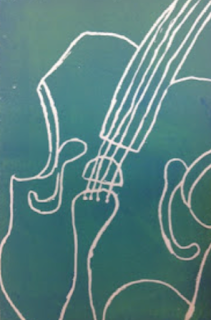
- Create an original Vermeer Instrument Compositions using drawing techniques learned in class
- Use neutral colors (black, white, grey, brown), line types (horizontal, vertical, diagonal), and value (lightness, darkness) inspired by Dutch Painter (1632-1975) Johannes Vermeer
- Use printmaking techniques (woodcut, etching, engraving, lithography) and design principles (emphasis, repetition, rhythm) based on Dutch Golden Age
- Define Camera Obscura (a darkened box with a convex lens for protecting the image of an object onto a screen inside)
Lesson One
Day One, Art Start
1. The Guitar Player (1670-1673) Johannes Vermeer

2. Read Secret Knowledge: Rediscovering The Lost Techniques Of The Old Masters by David Hockney

3. Discussion Questions "What type of mood does this scene create for you? What features do you see in the foreground of this painting? Can you find small dots of paint on the brick walls, trees, and boats? Why did the artist paint these white dots in the scene? How would you describe the texture of the musical instrument? How would you draw this texture using only lines? Which feature in the room reflects light the most brightly? Where can we see shadows in the room? What do you notice about the dresses? Can you find any other similarities in these three paintings? Can you find any differences in these paintings? Which direction is the light shining in this painting? How did the artist create the illusion of light reflecting on the pearl? What type of feeling does each color create for the viewer? Can you find objects in the picture that are typical props in Vermeer's paintings? What makes this painting different from the other interior scenes of this artist? How does the artist show distance?"
Lesson Activities
1. Choose 12" X 15" Printmaking Paper
2. Use pencil to draw simple shapes (circle, triangle, rectangle) and complex shapes (ellipse, parallelogram, hexagon) of the instruments for the instrument prints
3. Use wooden stylus to outline line variation (thick, thin, contour) of the positive space (instrument) of the Vermeer Instrument Compositions
Day Two, Art Start
1. Retrieve Vermeer Instrument Compositions for Assigned Tables
2. The Concert (1664) Johannes Vermeer

3. Discussion Questions "What was the first artwork the artist ever made? Do you think it is important to be a trained artist? What type of printmaking techniques do you think the artist preferred? What project did the artist work on? What do you think drove the artist to make prints? Who was an important mentor in this artists life? What materials did the artist favor? Why was the artist drawn to this subject matter? What does this artwork represent? What connection do artists have to their artwork? What materials did the artist favor? What do you think art means to this artist? Does this artwork represent something to the artist? What is inspirational about this artwork?"
Lesson Activities
1. Use engraving tools to outline line variation (thick thin contour outline) of the positive space (instrument) for the instrument prints
2. Use neutral colors (black, grey, brown, white) for the negative space (background) for the instrument prints
3. Use neutral colors (black, grey, brown, white) to fill in the positive space (foreground) of the Vermeer Instrument Compositions
Day Three, Art Start
1. Retrieve Vermeer Instrument Compositions for Assigned Tables
2. Set Up Studio Area (brayer, printmaking plates, gel plates, speedball ink)
Lesson Activities
1. Use printmaking paper to print one monoprint of every neutral color (black, brown, grey, white) of the instrument prints
2. Add highlights (reflective light, light source) to the positive space (foreground) of the Vermeer Instrument Compositions
3. Add shadows (cast shadow, reflective shadow) to the negative space (background) of the Vermeer Instrument Compositions
Artist Examples


 Student Examples


Wednesday, November 10, 2021
MARIO BUENO SHIP PRINTS
Mario Bueno Ship Prints
 Learning Targets

I can...
- Create an original Mario Bueno Ship Print using drawing techniques learned in class
- Use neutral colors (black, grey, brown), shape variation (geometric organic), and space (positive negative) inspired by Prolific Artist (1919-2001) Mario Bueno
- Use printmaking techniques (collagraph, monoprint, etching) and design principles (composition, gradation, proportion) based on Transportation Art
- Define Monoprint (a single impression of an image made from a block)
Lesson One
Day One, Art Start
1. Title Not Found (1990) Mario Bueno

2. Read How It Feels To Be A Boat Through Smooth and Stormy Seas by James Kwan

3. Discussion Questions "What was the first print this artist ever made? Do you think it is important to be a trained artist? What type of printmaking techniques do you think the artist preferred? What projects did the artist work on? What do you think drove the artist to make prints? Who was an important mentor in this artists life? What materials did the artist favor? Why was the artist draw to this subject matter? What does this artwork represent? What connection do artists have to their artwork? What materials did the artist favor? What do you think art means to this artist? Does this artwork represent something to the artist? What is inspiration about this artwork?"
Lesson Activities
1. Choose 12" X 15" Printmaking Paper
2. Use pencils to draw simple shapes (circle, triangle, rectangle) and complex shapes (ellipse, parallelogram, hexagon) of ships for ship prints
3. Use wooden stylus to outline line variation (thick, thin, contour) of the positive space (ship) of the Mario Bueno Ship Prints
Day Two, Art Start
1. Retrieve Mario Bueno Ship Prints for Assigned Table
2. Barcos Four (1981) Mario Bueno

3. Discussion Questions "What can you tell me about this picture? How do you think the artist came up with the idea for this picture? What title would you give this picture? How do you think the artist was feeling when he made this picture? How do you hope people will feel when they look at this picture? How does your eye move through this artwork? What choices did the artist mark to make that happen? What does this print say about the world we live in? How might your interpretation of this artwork be different from someone in an other culture? If you could ask the artwork a question, what would you ask?"
Lesson Activities
1. Use engraving tools to outline line variation (thick thin contour line) of the positive space (ship) for the ship prints
2. Use neutral colors (black, grey, brown) for the negative space (background) of the ship prints
3. Use neutral colors (black grey brown) to fill in the positive space (ship) of the Mario Bueno Ship Prints
Day Three, Art Start
1. Retrieve Mario Bueno Ship Prints for Assigned Table
2. Set Up Studio Area (brayer, printmaking plate, speedball ink)
Lesson Activities
1. Use printmaking paper to print one monoprint of every neutral colors (black, brown, grey) of the Ship Prints
2. Add highlights (reflective light, light source) to the positive space (ship) of the Mario Bueno Ship Prints
3. Add shadows (cast shadow, shadow) to the negative space (background) of the Mario Bueno Ship Prints
Artist Examples


 Student Examples


Saturday, September 28, 2019
CONTRASTING PRINTMAKING LEAVES
Contrasting Printmaking Leaves

Learning Targets
I can...- Create an original Contrasting Printmaking Leaves using techniques learned in class
- Use shape (complex, simple), line variation (thick, thin, outline, contour), and complimentary colors (red, green; blue, orange; purple, yellow) inspired by British Sculptor (1956-Present) Andy Goldsworthy
- Use design principles (balance, composition, repetition) and printmaking techniques (etching, engraving, screen printing) based on Ecological Art
- Define Monoprint (form of printmaking where lines or images can only be made once)
Lesson One
Day One, Art Start
1. Sumach leaves laid around a hole (1998) Andy Goldsworthy

Lesson Activities
1. Choose One 8" by 11" Printmaking Paper2. Use pencils to draw simple shapes (circle, triangle, rectangle) and complex shapes (ellipse, parallelogram, hexagon) of leaves onto printmaking plates
3. Use wooden stylus to outline line variations (thick, thin, contour) of contrasting leaves
Reminder:
- Initials & Home Teacher on Back of Paper
Day Two, Art Start

Lesson Activities
2. Use complimentary colors (blue, orange; red, green; yellow, purple;) to fill in the positive space of the Contrasting Leaves
3. Use complimentary colors (blue, orange; red, green; yellow, purple) to fill in the negative space of the Contrasting Leaves
Day Three, Art Start
1. Retrieve Contrasting Printmaking Leaves for Assigned Table2. Set Up Studio Area (brayer, printmaking plate, speed ball ink)
Lesson Activities
1. Use printmaking paper to print one monoprint of every complimentary color (blue, orange; red, green; yellow, purple) of Contrasting Leaves2. Add highlights (reflective light, light source) to positive space of Contrasting Printmaking Leaves
3. Add shadows (cast shadow, shadow) to negative space of Contrasting Printmaking Leaves
Artist Examples


Student Examples


Saturday, December 16, 2017
GEL PRINT SNOW GLOBES
Gel Print Snow Globes

Learning Targets
I can..- Create a Gel Print Snow Globe using printmaking techniques (engraving, superimposing, transferring) learning in class
- Use warm/cool colors (red, yellow, orange; green, blue, purple) shape variation (free form, geometric, organic) and implied texture (smooth, rough, bumpy) relating to Austrian Inventor Erwin Perzy
- Use design principles (variation, composition, contrast) inspired by 19th Century Art Movements
- Define Engrave (cut or carve an image, design, or text onto the surface of an object)
Lesson One
Day One, Art Start

Lesson Activities
Day Two, Art Start

Lesson Activities
Day Three, Art Start
Lesson Activities
Artist Examples


Student Examples


 Posts

