Thursday, December 19, 2024
PAPER FLOWER SCULPTURES
Paper Flower Sculptures

Learning Targets
I can...
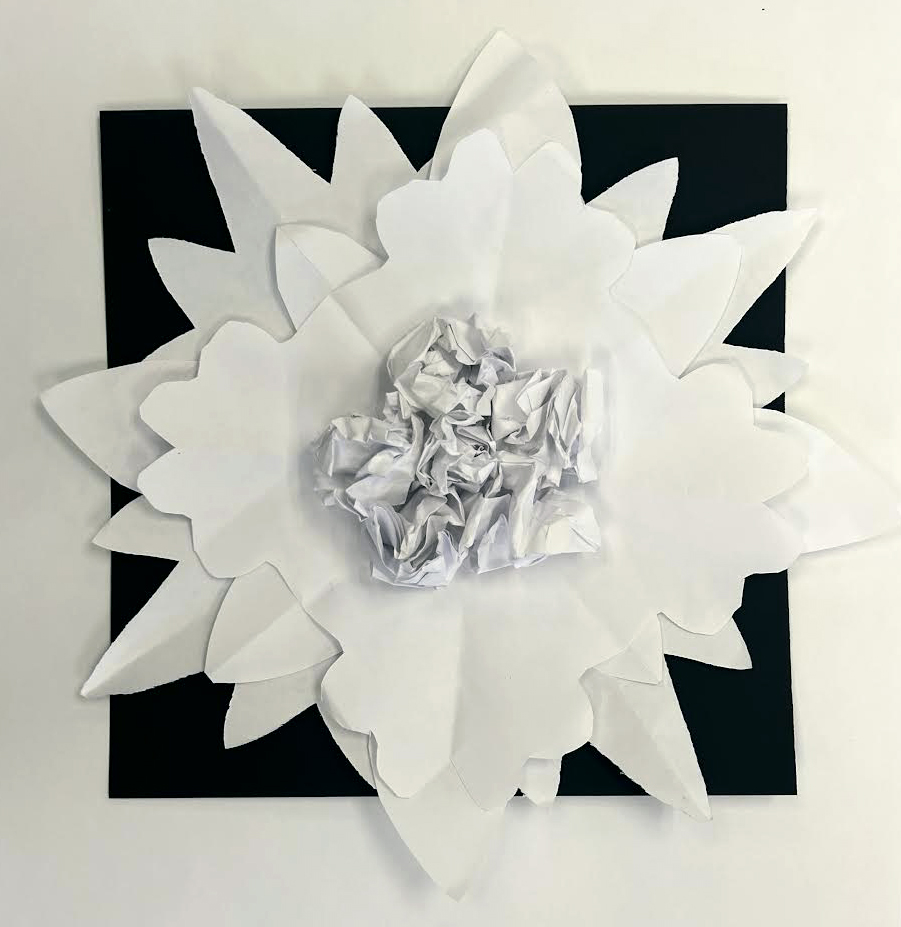
- Create an original Paper Flower Sculptures using sculpture techniques learned in class
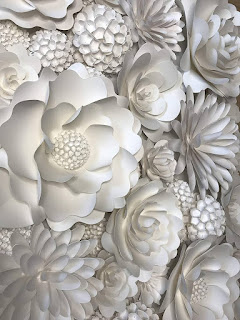
- Use shape variation (geometric organic free form), form (two dimensional, three dimensional), and texture (actual visual implied) inspired by American Sculptor (1998-Present) Kirsten Hassenfeld
- Use paper techniques (folding tearing bending curling) and design principles (proportion composition movement) based on American Art
- Define Curvesto (to create shadows within the sculpture)
Lesson One
Day One, Art Start
1. In The Moon (2007) Kirsten Hassenfeld

2. Read Have You Ever Seen A Flower by Shawn Harris

3. Discussion Questions "How do artists use paper, a two-dimensional object, to create a three-dimensional sculpture using a series of techniques? What do you think are important features of a flower and what shapes do these features take in your mind? Why are flowers such as Van Gogh's Sunflowers to Georgie O'Keefe series a favorited subject among painters? How does the artistic process parallel the development of a flower? How do visual methods help you better understand the functions of each plant part? After learning these visual art terms such as symmetry and balance, how do they contribute to the structure of a flower? How do you see the flowers functioning in a positive manner on these parade floats? What was the key thing you needed to keep in mind when creating your own sculpture? What did you find challenging about your artwork?"
Lesson Activities
1. Choose 12 X 12 Colored Construction Paper
2. Use three compositional elements (shape color texture) to select a flower to represent a memory, place, or event for flower sculptures
3. Use line variation (wavy, straight, curved) as a design principles (balance, movement, repetition) within the flower sculptures
Day Two, Art Start
1. Retrieve Paper Flower Sculptures for Assigned Tables
2. Blue Horn (2010) Kirsten Hassenfeld

3. Discussion Questions "Who is the artist of each sculpture? What do you know about him or her? what is the subject matter? When was this sculpture completed for and for whom (if known)? What medium was it done with? Why was it made, is it known? For what purpose or use does the sculpture have? How are these sculptures similar or different? What feeling do each of these sculptures reveal about the artist and style? What does these sculptures reveal about the artist? What does this piece reveal about the society in which they were created? What does this sculpture represent? What do you hink is happening in this sculpture? What action do you see and how does it contribute to the feeling of this piece? How is the artist telling us a story?"
Lesson Activities
1. Use compasses, protractors, and texture plates to add symmetrical shapes (circle, triangle, square) and expressive lines (straight, curved, swirling) to the paper flower sculptures
2. Use neutral colors (black, white, grey) to fill in the negative space (background) of the paper flower sculptures
3. Use neutral colors (black, white, grey) to fill in the positive space (foreground) of the Paper Flower Sculptures
Day Three, Art Start
1. Retrieve Paper Flower Sculptures for Assigned Tables
2. Set Up Studio Area (construction paper, clear tape, pencils, tempera paint)
Lesson Activities
1. Use scissors to cut out two dimensional symmetrical shapes (circle, triangle, rectangle) to create a three dimensional shape paper flower sculptures
2. Glue down three dimensional symmetrical shapes (cylinder, sphere, cone, pyramid) to create a three dimensional shape paper flower sculptures
3. Use sharpie markers to add beautiful patterns (hearts, stripes, swirls) within the positive space (flower) of the Paper Flower Sculptures
Artist Examples

 Student Examples



Tuesday, October 22, 2024
RUTH ASAWA HANGING SCULPTURES
Ruth Asawa Hanging Sculptures Learning Targets

I can...
- Create an original Ruth Asawa Hanging Sculptures using sculptures techniques learned in class
- Use line types (meandering, twisting, curving), geometric shapes (polyhedron, face, edge, prism), and space (positive, negative) inspired by Modernist Sculptor (1924-2013) Ruth Asawa
- Undestand sculpture techniques (carving, cast, modeling, assembling) and design principles (balance, emphasis, harmony) based on Modernism
- Define Basket Making (the process of weaving or sewing pliable materials into three dimensional artifacts)
Lesson One
Day One, Art Start

Lesson Activities
1. Choose 3 12" X 12" Colored Yarn
2. Use three compositional elements (shape, color, texture) to represent a special memory, place, or event
3. Use line variation (curved, straight, wavy) as a design principle (balance, movement, repetition) within the Ruth Asawa Hanging Sculptures
Day Two, Art Start
1. Retrieve Ruth Asawa Hanging Sculptures from Assigned Tables
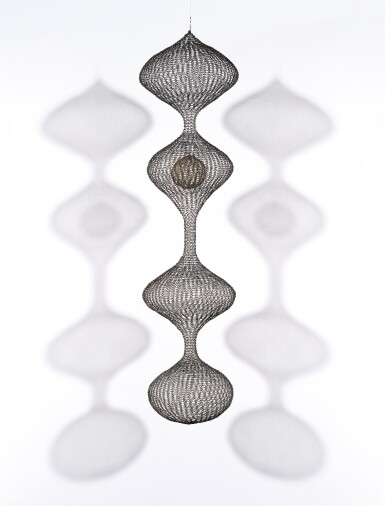
2. S. 645 Hanging Three-Lobed Single Layer Continuous Form (1958) Ruth Asawa

3. Discussion Questions "Who is the artist of each sculpture? What do you know about this artist? What is the subject matter of this artwork? When was this sculpture completed and for whom (if known)? What medium was this sculpture made with? For what purpose or use does the sculpture have? How are these sculptures similar or different? What feeling was the artist trying to convey? How did the artist accomplish this composition? What does this sculpture reveal about the artist and her style? What do these pieces reveal about the society in which they were created? What does the sculpture represent? What do you think is happening in this sculpture? How is the artist telling us a story?"
Lesson Activities
1. Use compasses, protractors, and texture plates to add symmetrical shapes and expressive lines to the Ruth Asawa Hanging Sculptures
2. Use complementary colors (red green; blue orange; yellow purple) to fill in the negative space (background) of the Ruth Asawa Hanging Sculptures
3. Use complementary colors (red green; blue orange; yellow purple) to fill in the positive space (foreground) of the Ruth Asawa Hanging Sculptures
Day Three, Art Start
1. Retrieve Ruth Asawa Hanging Sculptures for Assigned Tables
2. Set Up Studio Area (glue bottles, balloons, string, yarn, brushes, scissors)
Lesson Activities
1. Use scissors to cut out two dimensional symmetrical shapes (square, circle, triangle) to create a three dimensional hanging sculptures
2. Glue down three dimensional symmetrical shapes (cylinder, cube, prism) to create a simplified hanging sculptures
3. Use sharpie marker to add beautiful patterns (stripes, swirls, hearts, dots) to the positive space (foreground) of the Ruth Asawa Hanging Sculptures
Artist Examples


 Student Examples


Wednesday, September 13, 2023
CLAES OLDENBURG HAMBURGER RELIEFS
Claes Oldenburg Hamburger Reliefs

Learning Targets
I can...
- Create an original Claes Oldenburg Hamburger Relief using collage techniques learned in class
- Use shape variation (geometric, organic, free form), form (two dimensional, three dimensional), and texture (actual, implied, visual) inspired by American Sculptor (1929-2022) Claes Oldenburg
- Use sculpture techniques (layering, stacking, overlapping) and design principles (composition, repetition, variation) based on Pop Art
- Define Soft Sculpture (a type of sculpture made using cloth, foam, rubber, plastic, paper, fibers, and similar materials that are smooth)
Lesson One
Day One, Art Start
1. Two Cheeseburgers With Everything (Dual Hamburgers) (1962) Claes Oldenburg

2. Read Claes Oldenburg: Hold The Pickle by Bill Clarke

3. Discussion Questions "How is popular culture influenced by advertising? How are people influenced by the media and advertising? How and why do advertisers promote product? How does media have an effect on an artists' life? Why or why not? Who decides what is art and what is not art? Do these ideas change? What materials did the artist use? How did he use them? What can we learn about the artist by looking at this? How is this different from traditional artwork? How does an object go from being ordinary to becoming artwork? What colors did the artist use? What does his sculpture remind you of? What might the location smell like? Is it somewhere you would like to visit? What kinds of foods are representative examples of the American experience today? What is Public Art?"
Lesson Activities
1. Choose 12" X 15" Drawing Paper
2. Draw three thumbnail sketches using observational drawing skills (contour, outline, continuous) for hamburger collages
3. Use graphite pencil to draw sandwich parts (ketchup, mustard, tomatoes, bacon, cheese) for the positive space (hamburger) of the hamburger collages
Day Two, Art Start
1. Retrieve Claes Oldenburg Hamburger Reliefs for Assigned Tables
2. Giant Hamburger (1962) Claes Oldenburg

3. Discussion Questions "How did the artist make the hamburger look warm and delicious? How big do you think Giant Hamburger is? Would this sculpture have the same impact if it was the size of a real hamburger? What if it was very small? What does Giant Hamburger look like it was made from? Would Giant Hamburger have the same impact if it looked very realistic? How does his sculptures make you feel? Which food sculpture is your favorite? Why? How do you think the sculptures feel? If you created your own sculpture store, what would be in it? How would it feel to be in that space, interacting with the sculptures? What do you think Claes Oldenburg was trying to say through artwork?"
Lesson Activities
1. Use collage techniques (overlapping, layering, cutting) to add basic shapes (geometric, organic, free form) to positive space (hamburger) of the hamburger collages
2. Use collage techniques (overlapping, layering, cutting) to add basic shapes (geometric, organic, free form) to the negative space (background) of the hamburger collages
3. Use design principles (composition, repetition, gradation) to fill in the positive space (hamburger) of the Claes Oldenburg Hamburger Reliefs
Day Three, Art Start
1. Retrieve Claes Oldenburg Hamburger Reliefs for Assigned Tables
2. Set Up Studio Area (construction paper, glue sticks, fabric, yarn)
Lesson Activities
1. Use color combinations (analogous, complementary, secondary) to fill in the positive space (foreground) of the hamburger collages
2. Use color combinations (analogous, complementary, secondary) to fill in the negative space (background) of the hamburger collages
3. Add additional sandwich parts (pickles, french fries, utensils, sesame seeds) to the positive space (hamburger) of the Claes Oldenburg Hamburger Reliefs
Artist Examples


 Student Examples


Tuesday, December 14, 2021
KIMMY CANTRELL ABSTRACT FACES
Kimmy Cantrell Abstract Faces

Learning Targets
I can...
- Create an original Kimmy Cantrell Abstract Faces using sculpture techniques learned in class
- Use form (three dimensional, two dimensional), shape variation (geometric, organic), and space (positive negative) inspired by American Artist (1991-Present) Kimmy Cantrell
- Use cardboard techniques (slots, inserts, hinges) and design principles (contrast, proportion, gradation) based on American Art
- Define Relief (a raised surface with a flat back)
Lesson One
Day One, Art Start
1. Keeping The Faith (2021) Kimmy Cantrell

2. Read The Life of a Little Cardboard Box: Padded Board Book by Gisela Bohorquez

3. Discussion Questions "How do artists communicate ideas? Why does Kimmy Cantrell use asymmetry in his pieces? What was Kimmy Cantrell inspired by? What is the difference between a relief sculpture and a sculpture in the round? What elements and principles did Kimmy Cantrell use in his sculptures? Who wears many faces? What does this mean? How do individuals who wear different faces to represent his or her life? How do you bond pieces of cardboard together? How do you know a piece of artwork is finished?"
Lesson Activities
1. Add lines for proportion (head, neck, shoulder) within the silhouette of the portrait sculptures
2. Turn cardboard pieces into basic shapes (oval face, crescent ears, rectangle neck) of the portrait sculptures
3. Use need tools to draw facial features (oval eyes, round nose, thin mouth) within the silhouette of the Kimmy Cantrell Abstract Faces
Day Two, Art Start
1. Retrieve Kimmy Cantrell Abstract Faces for Assigned Table
2. Tough Times (2021) Kimmy Cantrell

3. Discussion Questions "Why do artists create self portraits? Does the way a person is sitting or standing tell you anything about them? What makes this portrait unique? Do you like the way the artist arranged the portrait? What does the background and the objects in the background of the picture tell us? How often does the artist repeat certain colors or shapes within the portrait? Is the portrait considered abstract or realistic? How do artists communicate these ideas?"
Lesson Activities
1. Add facial features (eyes, nose, moth) within the silhouette of the portrait sculptures
2. Add details (eye sockets, brow bone, moles) to the facial features (eyes, nose, mouth) of the portrait sculptures
3. Use modeling tools (paddle, brush, grips) to smooth out facial features (eyes, nose, mouth) of the Kimmy Cantrell Abstract Faces
Day Three, Art Start
1. Retrieve Kimmy Cantrell Abstract Faces for Assigned Table
2. Set Up Studio Area (cardboard pieces, scissors, glue sticks)
Lesson Activities
1. Add tempera paint to the positive space (neck, face, shoulder) of the portrait sculptures
2. Add tempera paint to the negative space (background, clothing) of the portrait sculptures
3. Apply Gloss Finish to the face proportions, facial features, and accessories of the Kimmy Cantrell Abstract Faces
Artist Examples


 Student Examples
Saturday, September 5, 2020
BEVERELY BUCHANAN CARDBOARD HOUSES
Beverly Buchanan Cardboard Houses

Learning Targets
I can...
- Create an original Beverely Buchanan Cardboard House using assemblage techniques learned in class
- Use form (two dimensional, three dimensional), shape variation (geometric, organic, free form), and space (positive negative) inspired by African American Artist (1940-2015) Beverly Buchanan
- Use sculpture techniques (assemblage, carving, casting) and design principles (balance, harmony, unity) based on American Art
- Define Architecture (the art or practice of designing and constructing buildings)
Lesson One
Day One, Art Start
1. Red Ladder (1995) Beverly Buchanan

2. Read "Beverly Buchanan: Shackworks A Sixteen Year Survey" by Eleanor Flomenhaft

3. Discussion Questions "How do artists work? How do artists and designers determine whether a particular direction in their work is effective? How do artists and designers learn from trial and error? What responsibilities come with the freedom to create? How do artists grow and become accomplished in art forms? What role does persistence play in revising, refining, and developing artwork? In what ways do artist take risks with their work? How do artist make and solve problems as they work on a piece of art? How do artists change their minds about their artwork as they continue working on it? How do artists talk and write about their artwork? How do artists talk and write about their experiences in making art?"
Lesson Activities
1. Choose Three 12 X 12 Cardboard Sheets
2. Use three compositional elements (shape, color, texture) to represent a memory, place, or event from ones own heritage
3. Use line variation (wavy, straight, curved) as a design principle (balance, movement, repetition) within ones Beverely Buchanan Cardboard House
Day Two, Art Start

Lesson Activities
1. Use compass, protractors and texture plates to add symmetrical shapes and expressive lines to cardboard houses
2. Use form (two dimensional three dimensional) to fill in the positive space (house) of the cardboard houses
3. Use form (two dimensional three dimensional) to fill in the negative space (base) of the Beverly Buchanan Cardboard Houses
Day Three, Art Start
1. Retrieve Beverely Buchanan Cardboard Houses for Assigned Tables
2. Set Up Studio Area (glue sticks, cardboard, push pins)
Lesson Activities
1. Use scissors to cut out two dimensional symmetrical shapes to create a three dimensional cardboard sculpture
2. Glue Down three dimensional symmetrical shapes to create a three dimensional cardboard house
3. Add decorations (old art, newspaper, fabric scraps, colored paper, buttons, collage bits) to positive space (house) of Beverely Buchanan Cardboard Sculptures
Artist Examples


 Student Examples


 Posts
Posts

